

Zinc, Elderberry Extract & Vitamin C Immune-Support Sachet: OEM Formulation, Extraction & Halal Specs
September 21, 2026 | by supersuper
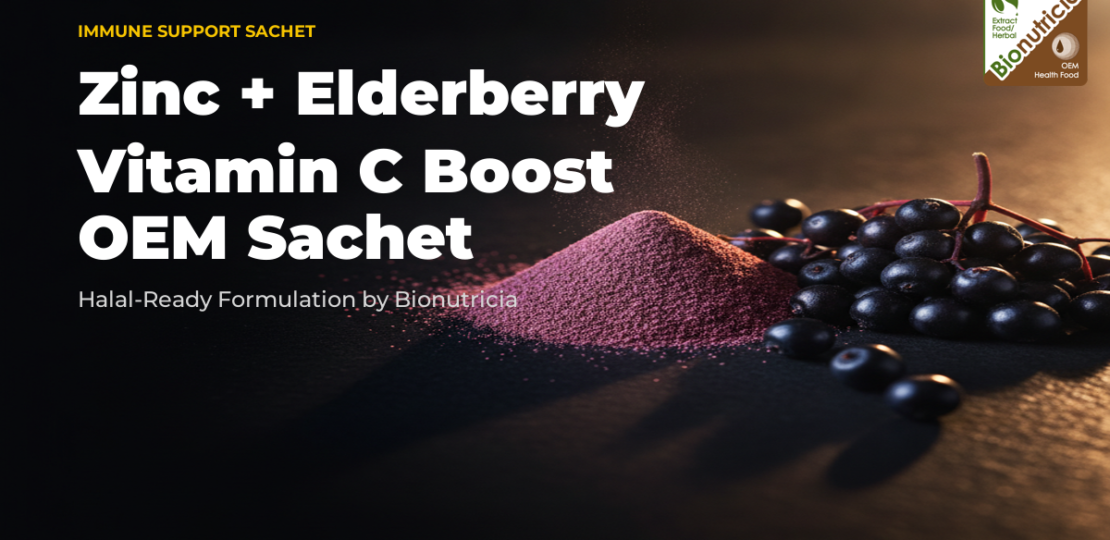
Direct answer: A zinc, elderberry (Sambucus nigra) extract and vitamin C immune-support sachet is formulated as a powder sachet because all three actives are dry-stable, dose accurately by weight, and blend cleanly with a halal-certified carrier base. Each active is specified separately: zinc as a food-grade mineral salt chosen for solubility and stability in a dry blend; elderberry as a standardised extract fraction processed to protect its anthocyanin content; and vitamin C as ascorbic acid or a buffered form chosen to limit oxidation and colour drift in storage. Elderberry extract and vitamin C are established actives in the immune-support category, each with its own body of published research, summarised below with ordinary editorial caution about study design and population. Below: the composition of this combination, how the botanical fraction is manufactured, and what to specify when briefing an OEM.
Why Formulate Zinc, Elderberry Extract and Vitamin C Together?
Brand owners building an immune-support SKU frequently want more than a single active on the label, and a powder sachet format allows three dry, stable ingredients to sit in one dose without the stability trade-offs a liquid format would introduce. Elderberry extract and vitamin C already sit together conceptually on Bionutricia’s own ingredient pages — elderberry extract for OEM is typically standardised against both its anthocyanin content and a vitamin C addition (see the related elderberry guide below) — and zinc is a common third addition brand owners request for the same immune-support category. Combining them into a single sachet is a formulation and manufacturing decision: it lets a brand run one SKU, one Certificate of Analysis panel, and one production line instead of three.
Formulating three actives into the same sachet is a manufacturing and stability exercise: checking ingredient compatibility, moisture behaviour, and dose accuracy across the blend. Each active retains its own identity and specification within the finished sachet — the anthocyanin standardisation of the elderberry fraction, the ascorbic acid assay for vitamin C, and the zinc content per dose are each verified independently on the finished-product Certificate of Analysis.
Elderberry Extract and Vitamin C: Published Research
Elderberry (Sambucus nigra) extract
A 2019 meta-analysis of randomised, controlled clinical trials, published in Complementary Therapies in Medicine, found that black elderberry supplementation was associated with effective treatment of upper respiratory symptoms when pooling the available human RCT data (Hawkins et al., 2019, PMID 30670267). This finding reflects pooled data from multiple randomised trials rather than a single study.
A separate randomised, double-blind, placebo-controlled clinical trial published in Nutrients in 2016 found that elderberry supplementation reduced cold duration and symptoms in air-travellers (Tiralongo et al., 2016, PMID 27023596). This trial was conducted specifically among air-travellers, a population with heightened cold-exposure risk during travel.
Vitamin C
A 2023 meta-analysis published in BMC Public Health, pooling data across multiple studies, reported that vitamin C supplementation reduces the severity of common cold symptoms (BMC Public Health, 2023; PMC10712193). This finding relates to symptom severity rather than prevention of colds themselves.
How the Botanical Fraction Is Manufactured
The elderberry fraction of a combination sachet is only as consistent as the extraction behind it. Bionutricia processes standardised botanical fractions using its patented enzymatic ultrasonic extraction (MY-188945-A) — a green-biotech-assisted extraction process designed to produce standardised extract fractions of consistent quality for use in food and supplement formats. This extraction step is a manufacturing and quality-control capability that produces a consistent elderberry extract specification batch to batch, supporting stable colour, anthocyanin content and CoA compliance across production runs.
Formulating the Sachet: Format, Compatibility & Halal Specs
A few practical points matter more than the marketing angle when three actives share one sachet:
- Format fit. Powder sachet is the natural format for this combination — all three actives are dry-stable, and a powder sachet avoids the pH and clarity challenges a liquid or gel sachet would introduce when vitamin C and a coloured botanical extract are mixed in solution.
- Vitamin C stability. Ascorbic acid oxidises over time and is sensitive to moisture, light and trace metal contact, all of which can also dull the elderberry fraction’s natural colour. A dry powder-sachet format with a moisture-controlled carrier and appropriate packaging barrier reduces this risk compared with a liquid format.
- Zinc form and specification. The zinc salt chosen — for example a gluconate or bisglycinate form — affects solubility, taste and blend stability in a dry powder. This is a specification decision the formulator and OEM agree together, set out on the CoA alongside the target zinc content per sachet.
- Carrier and excipient halal status. A halal certificate on zinc, elderberry extract and vitamin C individually does not automatically cover the carrier, anti-caking agent or flow agent that makes up the rest of the sachet. Every component of the finished blend needs its own halal chain of certification — not just the three headline actives.
- CoA specification. Ask for a Certificate of Analysis that specifies the elderberry extract’s anthocyanin standardisation, the vitamin C assay, and the zinc content per sachet, plus microbial and heavy-metal panels for the finished blend — not just the raw actives individually.
What to Specify When Briefing Your OEM
Before requesting quotes, a brand owner should be ready to specify: the zinc form and target dose per sachet; the elderberry extract’s anthocyanin standardisation level; the vitamin C form (ascorbic acid or a buffered alternative) and target dose; the finished sachet weight and flavour system; and the halal certification requirement covering every component in the blend, not only the three actives. Bionutricia’s OEM formats for this type of combination are powder sachets, liquid sachets, gel sachets, pouch beverages, chewable tablets and liquid bottles — a brand should confirm upfront which format the actives and target consumer suit before committing to packaging tooling.
Frequently Asked Questions
Why formulate zinc, elderberry extract and vitamin C together in one sachet?
It consolidates three dry-stable, halal-certifiable actives into one SKU, one CoA panel and one production run, which simplifies both formulation and quality control compared with running three separate products.
What form of zinc suits a dry powder-sachet blend?
A zinc salt such as a gluconate or bisglycinate form is typically chosen for its solubility, taste profile and stability in a dry powder blend. The exact form and target dose per sachet is a specification decision agreed between the brand and the OEM and confirmed on the finished-product CoA.
What OEM format suits a zinc, elderberry extract and vitamin C combination?
A powder sachet is the most straightforward fit because all three actives are dry-stable and it avoids the pH and colour-stability issues a liquid format can introduce when vitamin C and a coloured botanical extract share the same solution.
How is the elderberry extract fraction manufactured to a consistent specification?
Bionutricia’s patented enzymatic ultrasonic extraction (MY-188945-A) is a green-biotech-assisted process that produces the elderberry extract fraction to a standardised anthocyanin specification, batch to batch, supporting consistent colour and CoA compliance in the finished sachet.
Does a halal certificate on zinc, elderberry extract and vitamin C cover the whole sachet?
No. The carrier, anti-caking agent and any flow agent used to complete the sachet also need their own halal chain of certification — a certificate on the three headline actives alone does not extend automatically to the rest of the formulation.
Request a Quotation
Bionutricia Holding is a JAKIM-certified halal OEM and contract manufacturer based in Sungai Buloh, Selangor, Malaysia, operating under FSSC 22000, GMP, HACCP, JAKIM Halal, US FDA and MeSTI certification, with NanoVerify validation available for applicable formats. Bionutricia supplies powder sachets, liquid sachets, gel sachets, pouch beverages, chewable tablets and liquid bottles, including contract extraction using its patented enzymatic ultrasonic process (MY-188945-A). To request a quotation for a zinc, elderberry extract and vitamin C combination sachet, contact Bionutricia at ng@bio-nutricia.com or WhatsApp +60 16-661 8510, or visit bionutricia.com for full certification documentation.
Related Guides
- Elderberry (Sambucus nigra) Extract OEM: Anthocyanin & Vitamin C Standardisation for Immune-Support Formats
- Single-Herb vs Multi-Herb Blend Formulation: Which Is Right for Your OEM Brand?
- Powder Sachet vs Liquid Sachet vs Pouch Beverage vs Liquid Bottle: Which Format Wins for Your Supplement Category?
Article by Bionutricia R&D Team. Last updated: 21 September 2026.
RELATED POSTS
View all