

Knowledge: Blackcurrants (Ribes nigrum)
October 5, 2024 | by bionutriciaadmin
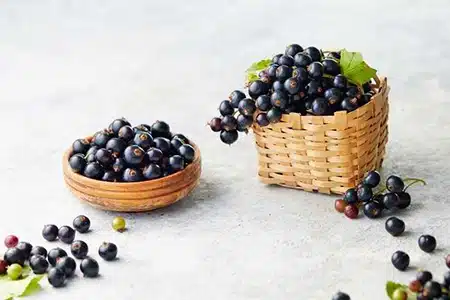
Blackcurrants (Ribes nigrum) originate from Northern Asia and Central and Eastern Europe and is widely cultivated in most countries of Europe as well as New Zealand. The plant produces purple-black, sweet, aromatic, edible and seed-containing berries of up to 12 mm in diameter. The berry fruit has a glossy skin with a persistent apical calyx. Blackcurrant fruits and leaves have been used as both Asian and European traditional medicine for the treatment of a variety of ailments.
Black currants are amazingly high in vitamins and antioxidants. Like other dark-colored fruits and vegetables, these berries are rich in anthocyanins, a class of polyphenols known to have wide-ranging health benefits such as slowing down the effects of dementia or giving anti-inflammatory properties to reduce the effects of rheumatoid arthritis. Blackcurrants have been reported to improve cardiovascular health and lower the risk of glaucoma.
Anthocyanins are found mainly in blackcurrant fruit skins and constitute nearly 90% of total polyphenolic compounds present.
Blackcurrant can be included in fruit juice blends to provide added health benefits and delicious flavour. It also popular to be made into jams, jellies, syrups, candies and blackcurrant extract.
We provide practical, easy & consistent on food processing application.
Fresh natural flavor extract powder for Bakery & Beverage.
Vegan, Non-GMO, No Fillers, No Flavors, No Additives, No Artificial Colors, Soy and Gluten Free, Lab Tested for Authentic & Active Compound
Good for Skin
| In vivo study on effect of blackcurrant on skin | ||
|---|---|---|
| Subject | Ovariectomized rats (n=10) | |
| Duration | 3 months | |
| Dosage | 3% blackcurrant extract | |
| Group |
| |
| Parameters analyzed | Collagen thickness, elastin number, hyaluronic acid expression | |
| Outcomes | Visible benefits Blackcurrant extract increased the level of collagen, elastin and hyaluronic acid in skin. | |
| Functions | Phytoestrogen present in blackcurrant has beneficial effect on skin | |
Anti Inflammation of Obesity
| In vivo study on effect of blackcurrant on obesity | ||
|---|---|---|
| Subject | Male rats (n=11) | |
| Duration | 12 weeks | |
| Dosage | 0.1% blackcurrant extract | |
| Group |
| |
| Parameters analyzed | Body weight, adipocyte size, expression of inflammation markers and metabolic genes | |
| Outcomes | Visible benefits Blackcurrant supplementation decreases obesity-induced inflammation in adipose tissue and splenocytes by modulating energy metabolism in skeletal muscle. | |
| Functions | Blackcurrant could reduce obesity-induced inflammation, particularly macrophage infiltration in the adipose tissue. | |
Improve Insulin Sensitivity
| In vivo study on effect of blackcurrant on obesity | ||
|---|---|---|
| Subject | Male rats (n=50) | |
| Duration | 8 weeks | |
| Dosage | 100, 300, and 900 mg/kg body weight per day | |
| Group |
| |
| Parameters analyzed | Energy metabolism, insulin tolerance, hyperglycemic clamp | |
| Outcomes | Visible benefits
| |
| Functions | BC could improve insulin sensitivity and improve glucose uptake in insulin-deficient individuals. | |
Reduce Cholesterol
| In vivo study on effect of blackcurrant on cholesterol | ||
|---|---|---|
| Subject | Young healthy women (n=12) | |
| Duration | 29 days | |
| Dosage | 100g blackcurrant powder daily | |
| Group |
| |
| Parameters analyzed | Serum lipids | |
| Outcomes | Visible benefits
| |
| Functions | Daily intake of BC has a hypocholesterolemic effect in healthy women. | |
Reference
- https://www.mdpi.com/2072-6643/10/4/495
- https://www.sciencedirect.com/science/article/abs/pii/S0955286314001181
- https://www.mdpi.com/2076-3921/10/5/756
- https://www.mdpi.com/1420-3049/26/13/4085
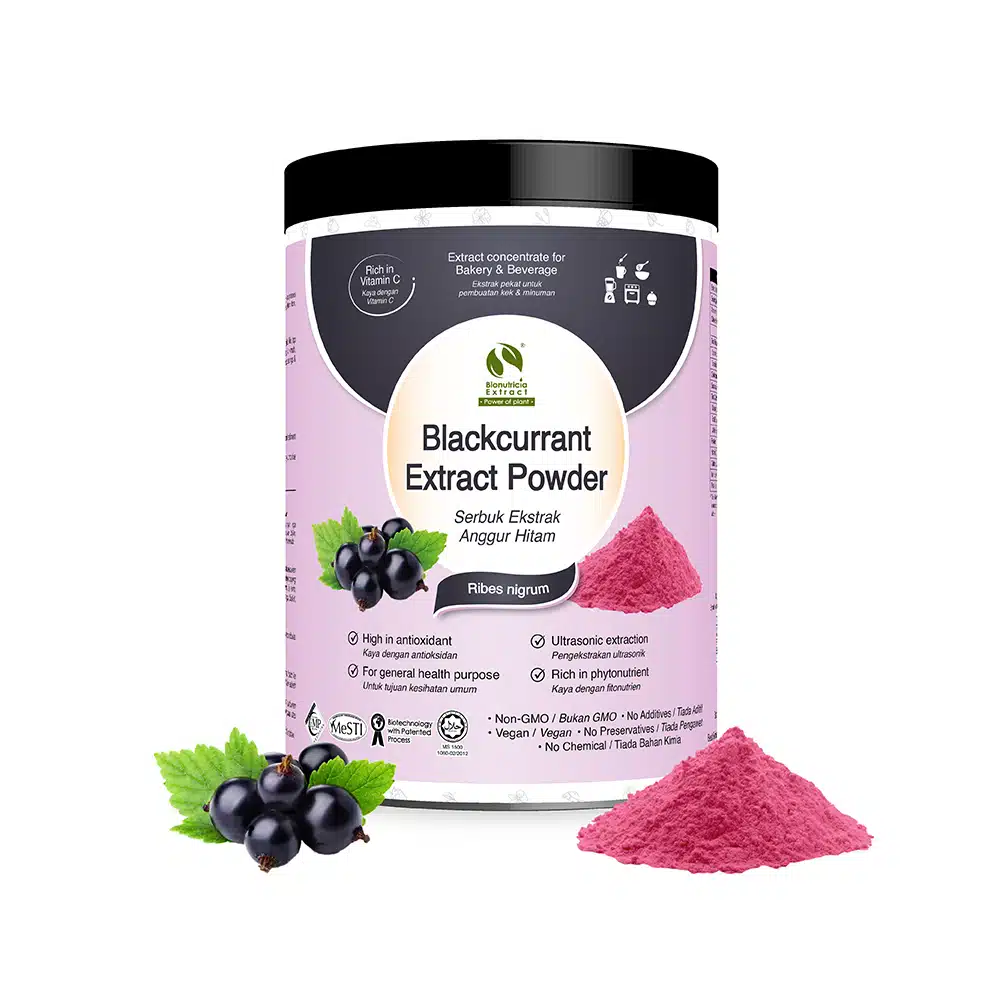
Blackcurrant (Ribes nigrum) Standardized Extract Powder
- Pure 20:1 Blackcurrant Ribes nigrum Extract
- Healthy for eyes
- Healthy for skin
- May boost your memory
- Rich in antioxidant
- Rich in phytonutrient
- Ultrasonic hot water/solvent extraction
RELATED POSTS
View all

How to Source Trusted Pandan Leaf Extract in Bulk to the US and Canada?
October 5, 2024 | by bionutriciaadmin
Knowledge: Strawberry (Fragaria x Ananassa)
October 5, 2024 | by bionutriciaadmin
Knowledge: Gotu Kola Pegaga (Centella asiatica)
October 5, 2024 | by bionutriciaadmin