


Your Halal Logo Is Not Your Audit: What a JAKIM Auditor Actually Checks
July 21, 2026 | by supersuper

A JAKIM halal certificate on the box proves a claim; it does not, by itself, prove a passing audit. In a real JAKIM audit, an auditor checks the halal document behind every ingredient, the cleaning validation on shared lines, and full batch traceability. The certificate is only the starting line — here is what a JAKIM auditor actually checks inside a supplement factory.
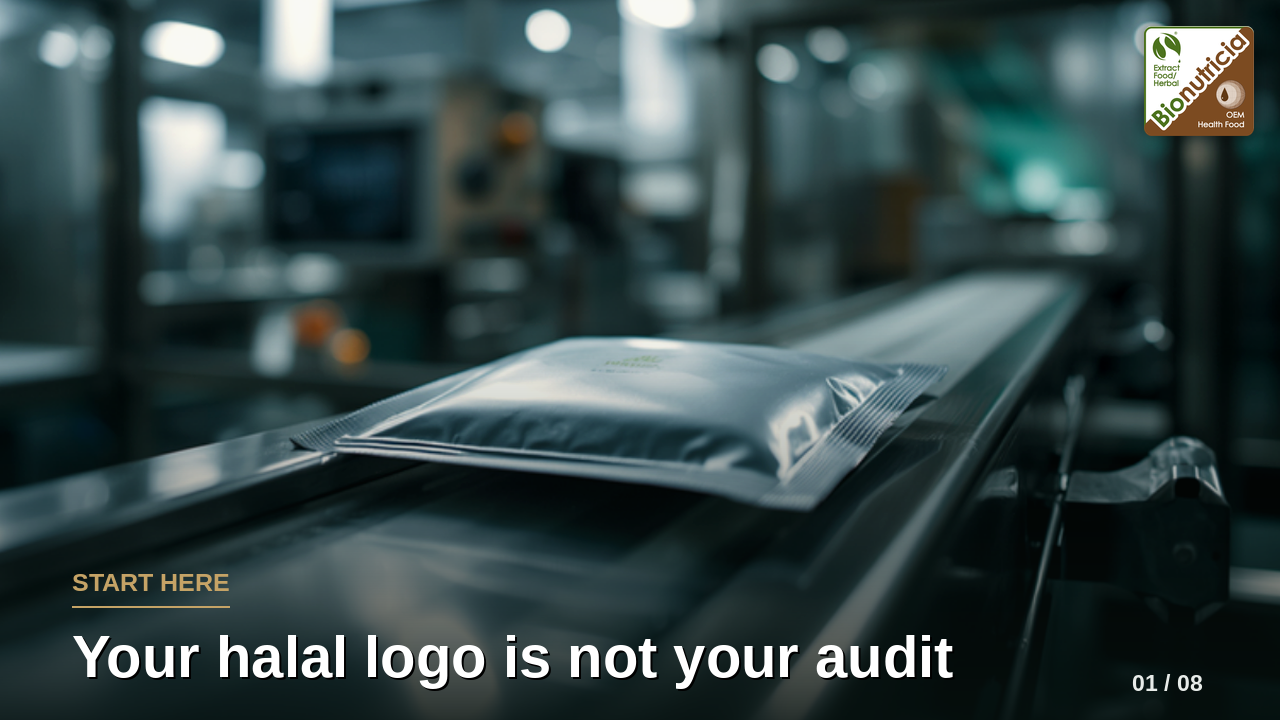
The mistake: the logo is the claim, the audit is the proof
Most buyers treat the halal logo on a box as the guarantee. It isn’t. The logo is what you claim; the audit is what an auditor can prove. A valid certificate and a batch that would actually pass an audit are two different things — and they are verified in completely different ways. For a Malaysian halal supplement OEM, the audit is the real test.

1. The paper trail behind every ingredient
A JAKIM auditor does not stop at your facility certificate. They follow the documentation behind every ingredient that goes into the product — where each one came from, and whether its halal status is documented and current. JAKIM audits the whole facility and supply chain, not just the finished-product label.
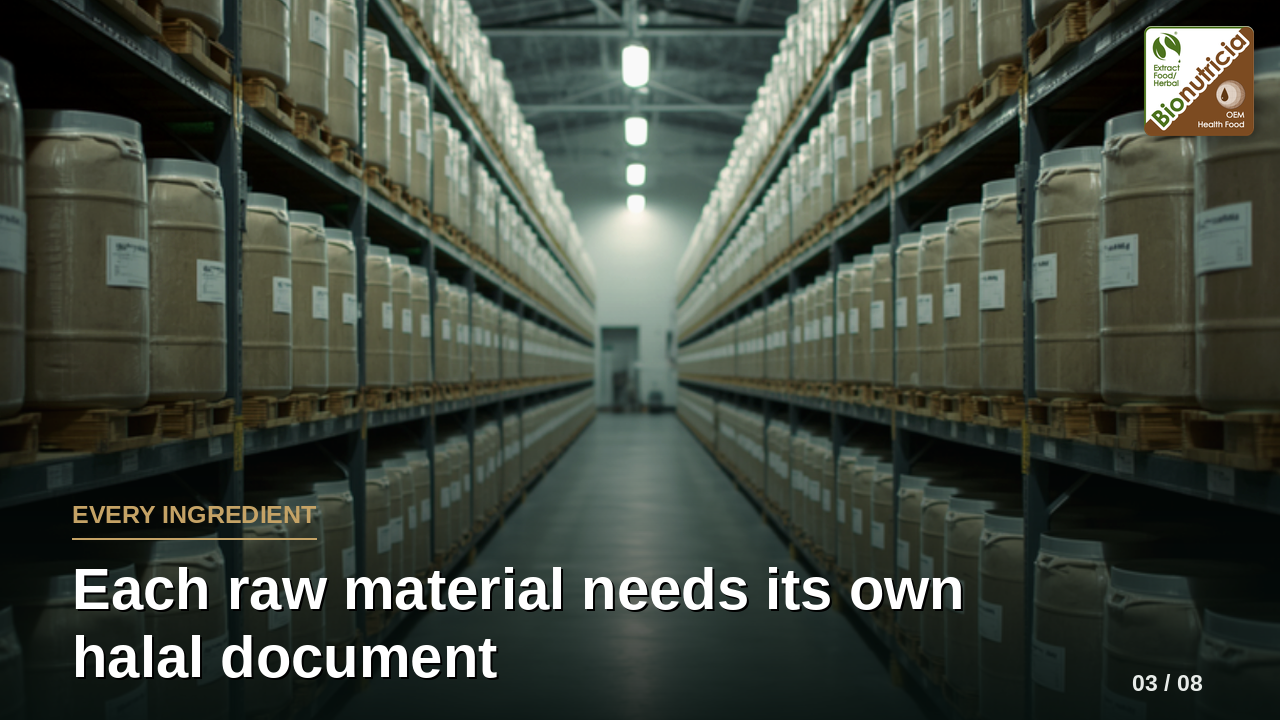
2. A valid halal document for every raw material
The first question is the hardest to fake: can you prove where each raw material came from? Every ingredient needs its own valid halal document — the supplier’s, not just yours. A halal finished product is made only of halal-documented inputs, and the auditor works down the bill of materials one line at a time.
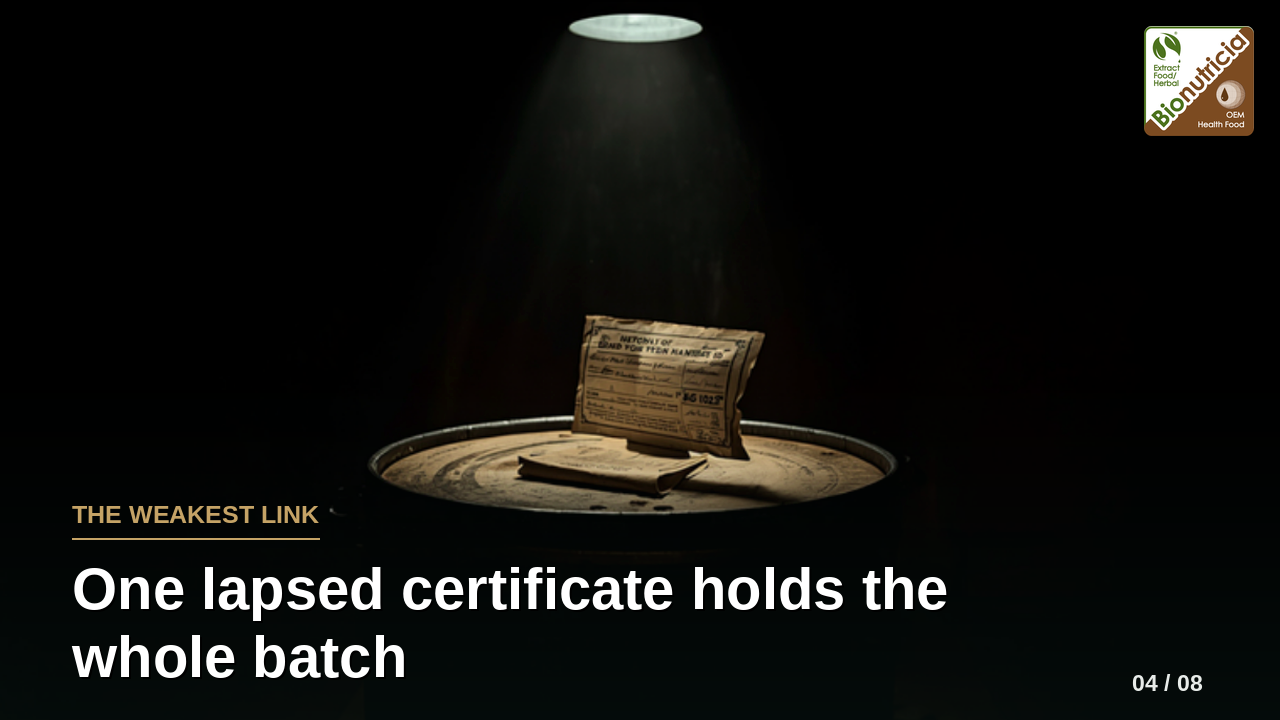
3. The weakest document, not the average
Halal status is only as strong as its weakest documented input. One lapsed certificate — on one flavour, one carrier, one colour — and the whole batch is in question. Auditors look for the single gap, not the comfortable average. In practice, most halal non-conformities arise not from the active ingredient but from overlooked processing aids, lubricants, carriers, flavour systems or gelatin-based components.
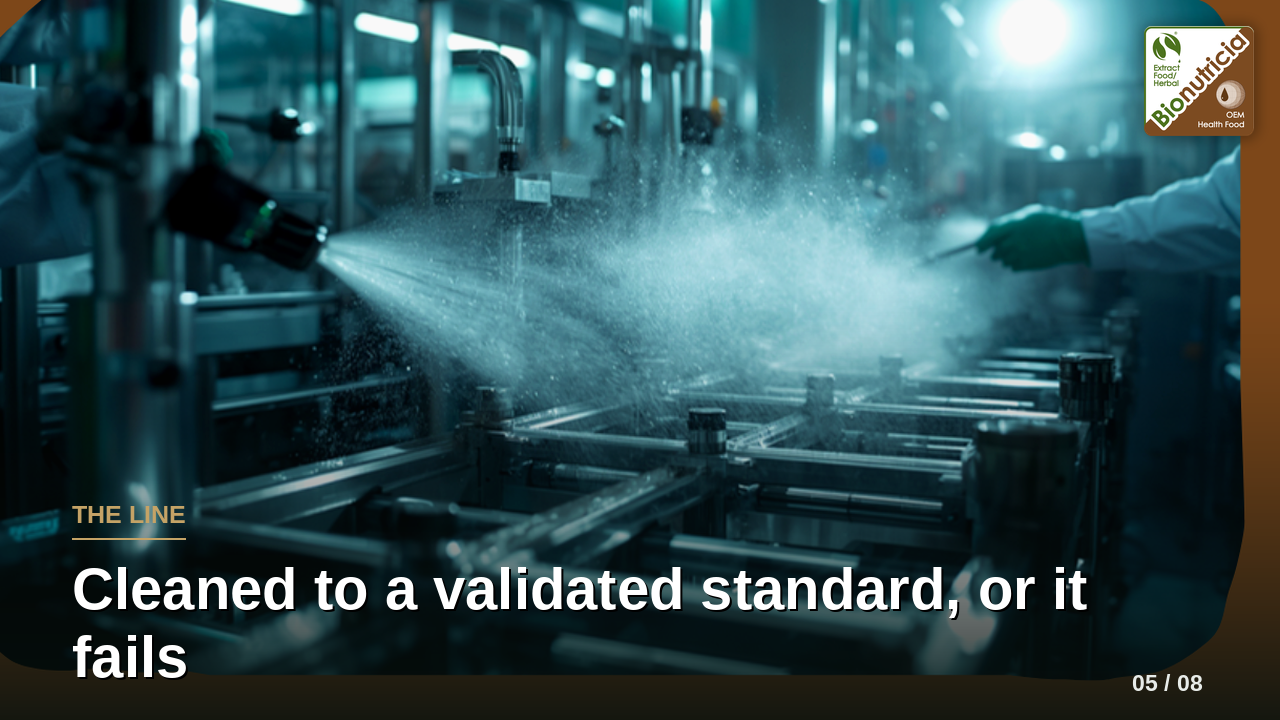
4. Cleaning validation on shared lines
Then the auditor checks the line itself. Was it cleaned to a validated standard before your run? On shared equipment, without documented cleaning validation, cross-contact is assumed rather than disproven — and that is one of the fastest ways to fail. Dedicated halal lines and segregated storage exist precisely to remove this doubt.
5. End-to-end traceability
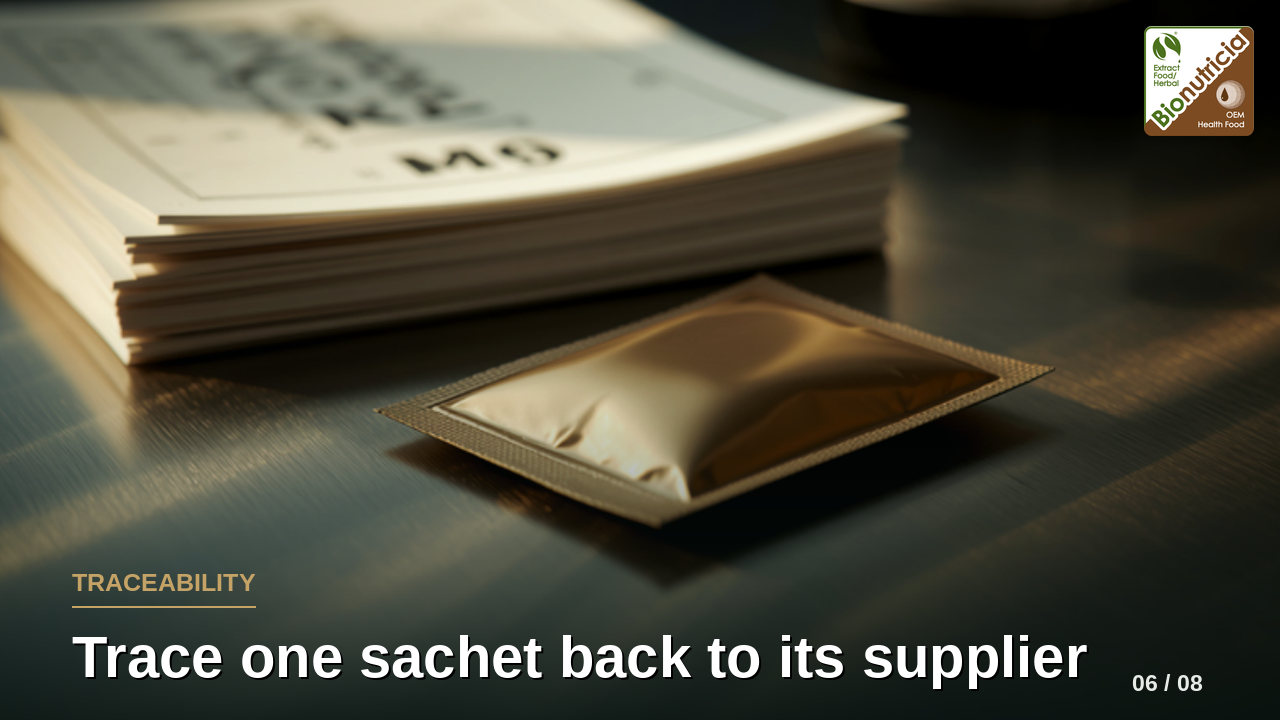
Auditors pick one finished sachet and trace it backwards: batch number, to raw-material lot, to supplier. If the trail breaks anywhere along the chain, the halal claim breaks with it. Traceability is not paperwork for its own sake — it is the whole guarantee, and it is why every batch must reconcile to its inputs.

6. SOPs that match the floor
Finally, the auditor reads your standard operating procedures, then watches the floor. The two must match. A certificate on the wall proves intention; the audit proves the system actually runs the way the paperwork says it does. This is the difference between a factory that holds a certificate and one that lives by it.
Halal is built in, not stamped on
This is why halal has to be built into the process, not stamped on at the end. At Bionutricia — a Malaysian halal supplement OEM established in 2006, with 239+ brand partners and facility-level JAKIM Halal certification alongside FSSC 22000, US FDA, GMP, HACCP and MeSTI — every ingredient carries its own halal document, traced to batch. A JAKIM audit is therefore something the team is always ready for, never something to scramble to pass.
One test for any manufacturer you are weighing up: ask for the halal document of a single raw material, and time how long it takes to arrive. The answer tells you whether halal is built into their process — or stamped on at the end.
Frequently asked questions
Does a halal certificate on the product guarantee it will pass a JAKIM audit? No. The certificate reflects a facility and product claim; a JAKIM audit re-verifies the halal documents behind each ingredient, cleaning validation and traceability at the time of the audit.
What do JAKIM auditors actually check in a supplement factory? The halal document behind each raw material, segregation and cleaning validation on shared lines, end-to-end batch traceability, and whether the written SOPs match what happens on the floor.
Why can one ingredient fail a whole halal batch? Halal status is only as strong as its weakest documented input. A lapsed certificate on a single flavour or carrier puts the entire batch in question.
Which ingredients most often cause halal non-conformities? Usually the processing aids, lubricants, carriers, flavour systems and gelatin-based components — rarely the active ingredient itself.
Do international halal marks check the same things as JAKIM? Many audit only the ingredient list. JAKIM audits the whole facility, supply chain, production lines and documentation trail, which is why it is treated as a process audit.
What is halal traceability? The ability to trace one finished unit back through its batch number, raw-material lot and supplier without the chain breaking at any point.
Is JAKIM halal certification recognised outside Malaysia? Yes. JAKIM is recognised by Saudi Arabia’s SFDA and the UAE’s ESMA, which fast-track Malaysian halal products through import inspection.
How can a brand check whether an OEM is genuinely halal-ready? Ask for the halal document of a single raw material and time how long it takes to produce. A halal-ready OEM can supply it in minutes.
RELATED POSTS
View all


The Formula They Only Take Once: Why Supplement Taste Decides the Reorder
August 11, 2026 | by supersuper

Article: Effects of blueberry and cranberry on type 2 diabetes parameters in individuals with or without diabetes
October 5, 2024 | by bionutriciaadmin