

Twenty Years Behind the Label: What We Learned Building 239+ Supplement Brands
July 13, 2026 | by supersuper
By Ts. Ng Kuak Ping, FIFST — Food Technologist, Executive Manager, Bionutricia
Short answer: Bionutricia has manufactured halal supplements from Sungai Buloh, Malaysia since 2006 — twenty years — for 239+ brand partners, whose names, not ours, go on the front of the pack. This is what two decades on the invisible side of the industry actually teaches you: that the brand and the factory are two completely different businesses, and the people who understand that build the most durable companies.
The name on the front is never ours
Somewhere in a pharmacy, in a health store, in an export warehouse, there is a shelf. On that shelf are products that came out of our facility in Sungai Buloh. None of them carry our name.
That is not an accident or a failure of marketing. It is the entire arrangement. For twenty years our job in the OEM business has been to be extremely good at something the customer is never supposed to think about.
It gives you a strange vantage point. You watch hundreds of brands arrive with an idea, and you get to see — from behind the curtain, over years — which ones survive. You start to notice patterns that are invisible from the front.
Behind hundreds of brands you have seen is one building you have never heard of.
Lesson one: the brand and the factory are different businesses
This is the one that costs people the most, so it goes first.
Sooner or later a successful brand founder asks whether they should build their own plant. The logic feels like maturity: we’re big enough now, why pay someone else’s margin?
What that question misses is that a factory is not a bigger version of a brand. It is a different animal with a different metabolism. A brand runs on demand — attention, trust, distribution, shelf. A factory runs on utilisation — hours the line is actually producing. Those two things are only loosely related, and the skills that make you great at one do almost nothing for the other.
The founders who have flourished with us are the ones who worked out early which business they were actually in, and then went all in on it. They own the formula, the label, the audience and the shelf. They let us own the machines and the audits.
Lesson two: certification is a system, not a certificate
New partners often assume halal certification is a document you obtain. It isn’t. It is a system you operate, continuously, and it never switches off.
What we maintain, permanently:
- JAKIM Halal — the certification that opens the global halal market, and the one auditors take most seriously
- FSSC 22000 — food safety system certification
- GMP — Good Manufacturing Practice
- HACCP — hazard analysis and critical control points
- MeSTI — Malaysia’s food safety assurance scheme
- US FDA registration — required to ship into the United States
Plus NanoVerify certification for our nano-delivery work.
Here is what twenty years teaches you about that list: the cost of maintaining it is almost identical whether you make one batch or a thousand. The auditor’s week does not shrink because your quarter was slow. Documentation, validation, retained samples, corrective actions — they run on the calendar, not on your order book.
Which means every brand that builds its own plant quietly acquires a second company: a quality department. Most of them did not intend to start one.
Lesson three: the science has to be real, or it will find you
The supplement industry has a tolerance for vagueness that we have never been comfortable with. “Premium extract.” “Advanced delivery.” Numbers on packs that mean nothing under examination.
We took the slower route. Our extraction process is patented — MY-188945-A. Our liposomal (herbosomal) delivery platform is patented — PI2023005773. Those took years, and they exist because a patent is a claim you have had to defend in front of people whose job is to disbelieve you.
The commercial argument for doing it properly is simple: a brand built on a claim that cannot survive scrutiny is a brand with a fuse burning inside it. We would rather our partners not be holding that.
Lesson four: formats are a strategy, not a detail
How a supplement is delivered changes who will actually take it, and how often. We build in:
- Powder sachets
- Liquid sachets
- Gel sachets
- Pouch beverages
- Chewable tablets
- Liquid bottles
- Botanical extracts
What we have watched, repeatedly, is that format is often the difference between a product that gets consumed and a product that gets bought once and forgotten in a drawer. Compliance — the human kind, the will-they-actually-take-it kind — is a packaging decision as much as a formulation one. Brands that treat it as an afterthought lose their repeat purchase and never work out why.
Lesson five: the marketer is the one job we cannot do
We can formulate. We can certify. We can run stability, hold retained samples, produce batch records, scale a formula from a trial run to a container, and get it through Port Klang with the paperwork clean.
There is exactly one thing we cannot do, and it happens to be the only thing that decides whether the brand lives: build the demand.
The most successful partners we have had in twenty years were not the ones with the biggest opening order or the deepest pockets. They were the ones who understood their customer with unreasonable precision, and who spent every hour they had on that — because they had handed everything else to us.
That is the whole trade. They did the marketing. We did everything else.
Bring the audience. We’ll bring the factory.
Twenty years, and the part that hasn’t changed
The industry looks nothing like it did in 2006. The delivery science has moved. The regulatory bar has risen, sharply, and rightly. Halal certification has gone from a regional requirement to a global passport.
But the underlying arrangement has not moved at all. Someone has to be extremely good at the invisible half. Someone has to be extremely good at the visible one. The brands that last are the ones that were honest with themselves about which half they were built for.
We know which one we’re built for. We’ve been doing it since 2006 — and on every product we make as an OEM, the name on the front belongs to our partner.
Frequently asked questions
What does Bionutricia do?
Bionutricia is a halal supplement OEM and contract manufacturer in Sungai Buloh, Malaysia, with head office in Kota Damansara. Since 2006 we have manufactured for 239+ brand partners, who put their own names on the products. We hold FSSC 22000, GMP, HACCP, JAKIM Halal certification, US FDA registration and MeSTI, plus NanoVerify certification, and operate two proprietary platforms: extraction (MY-188945-A) and liposomal (PI2023005773).
How long has Bionutricia been manufacturing supplements?
Established in 2006 — 2026 is our twentieth year. Over that period we have produced for more than 239 brand partners from our Sungai Buloh facility in Malaysia.
What certifications does a halal supplement manufacturer need?
JAKIM Halal, FSSC 22000, GMP, HACCP, MeSTI, and US FDA registration for shipments into the United States. Each carries its own audit cycle and must be maintained continuously, not obtained once.
Why do supplement brands use a contract manufacturer instead of building their own factory?
Because a factory converts a variable cost into a fixed one. Rent, power, trained staff, maintenance and a permanent six-certification compliance system continue whether or not the line runs — and those audits cost nearly the same at one batch or a thousand. A contract manufacturer keeps that cost variable during the years a brand is still discovering its demand.
What product formats can Bionutricia manufacture?
Powder sachets, liquid sachets, gel sachets, pouch beverages, chewable tablets, liquid bottles and botanical extracts, plus our patent-pending herbosomal (liposomal) delivery platform (PI2023005773).
Twenty years. 239+ brands. None of them ours.
Bionutricia manufactures halal supplements from Sungai Buloh, Malaysia. FSSC 22000 · GMP · HACCP · JAKIM Halal · US FDA registration · MeSTI · NanoVerify. Patented extraction (MY-188945-A) and liposomal (PI2023005773) platforms.
Your name goes on the label. Ours never does. Talk to us.
Reviewed by Bionutricia’s in-house technical team — registered pharmacist, nutritionist, dietitian and PhD in biomedical science. This article is company and manufacturing information, not medical advice.
RELATED POSTS
View all

Colostrum Is the ‘New Collagen’: What a 2,454% Boom Means for Halal Supplement Brands
September 9, 2026 | by supersuper
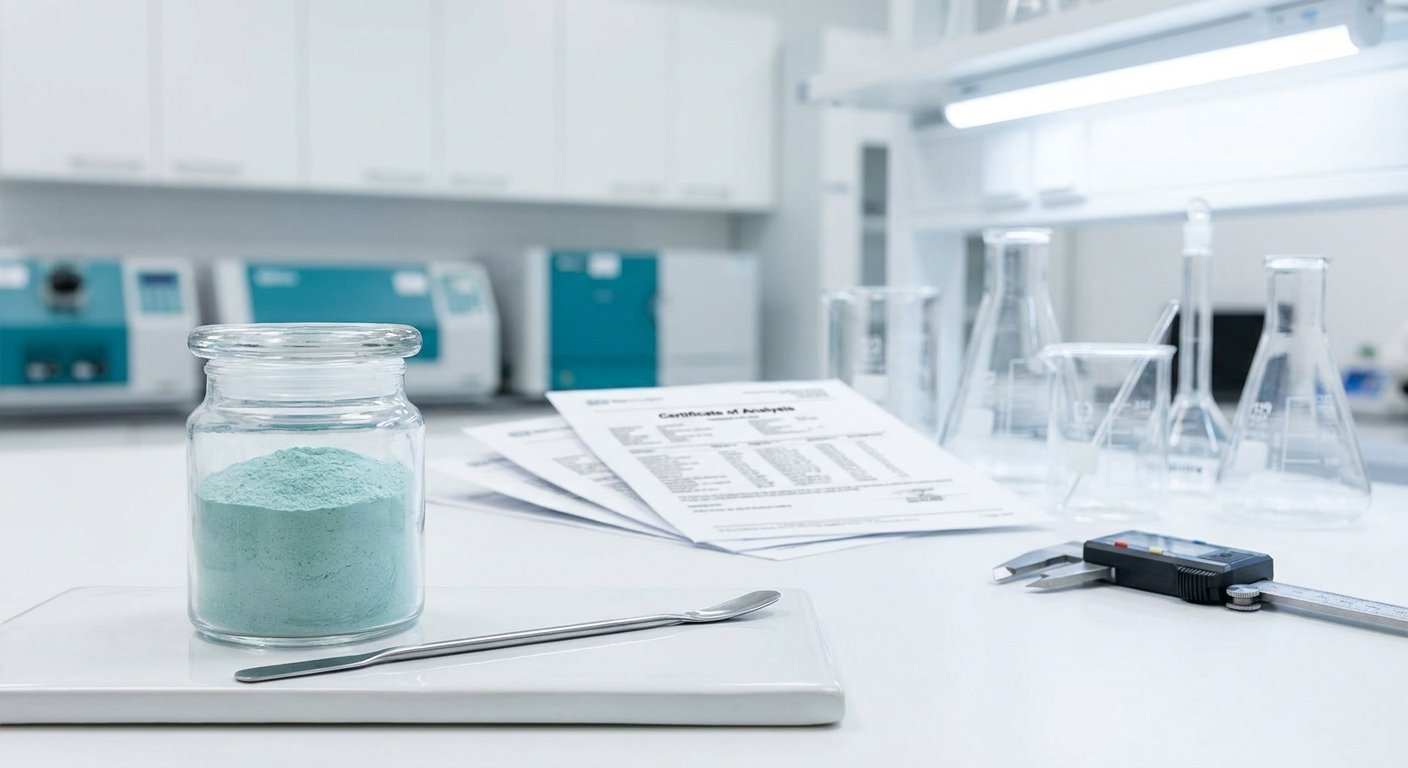
COA & Third-Party Lab Testing Checklist — COA & Semak Ujian Makmal Pihak Ketiga
September 18, 2026 | by supersuper
OEM vs In-House Supplement Manufacturing: The Decision Founders Get Wrong
July 13, 2026 | by supersuper