

What “100:1 Extract” Actually Means (And Why a Bigger Number Can Be Worse)
July 23, 2026 | by supersuper
“100:1” is the most impressive number on an extract spec sheet — and often the least useful. An extraction ratio is a yield spec: it tells you 100 kg of raw botanical were reduced to 1 kg of extract. It says nothing about how much active compound survived. The number a serious buyer checks is not the ratio, but what the extract is standardized to — a tested marker percentage, confirmed on a Certificate of Analysis.
The myth: a ratio is a strength rating
The single most-quoted number on an extract spec sheet is treated like a potency score. It isn’t one. On its own, an extraction ratio tells a buyer almost nothing about what is actually inside the powder — which is exactly why cheaper suppliers lean on it.
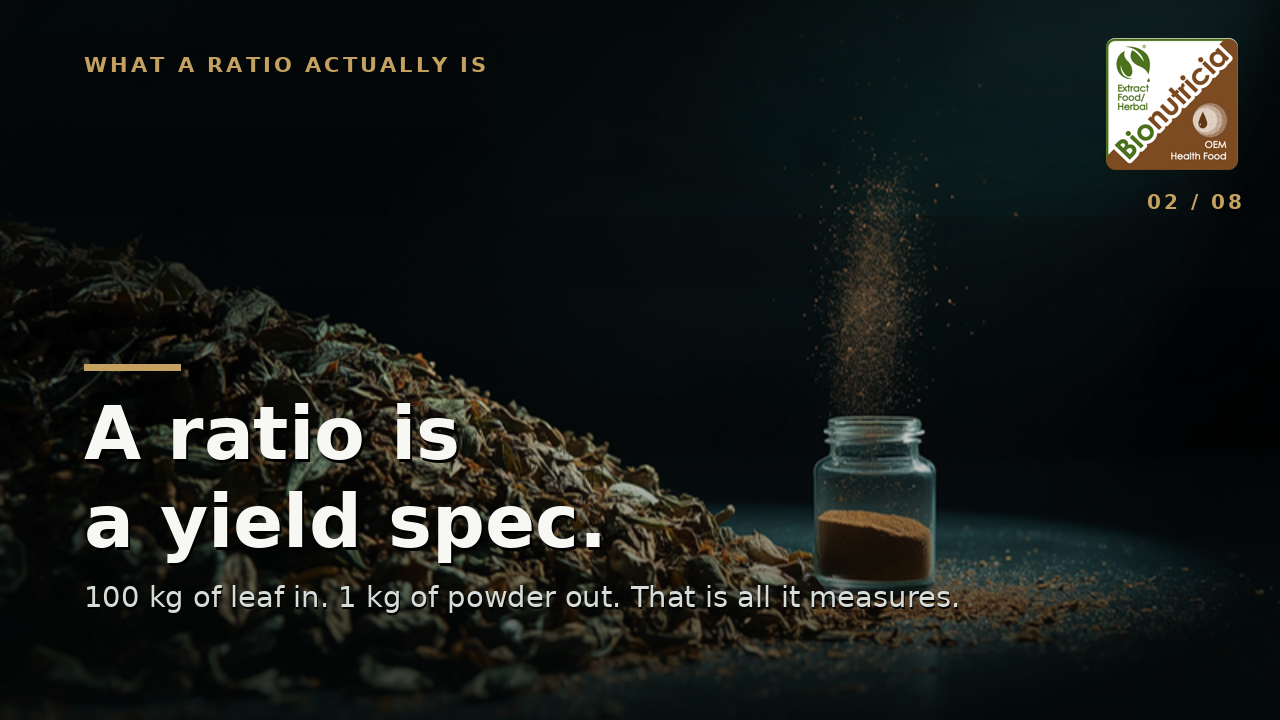
1. What a ratio actually measures
A plant-to-extract ratio is a yield specification. “100:1” means one hundred kilograms of raw botanical were processed down to one kilogram of extract. It describes how much weight was removed in concentration — nothing more.
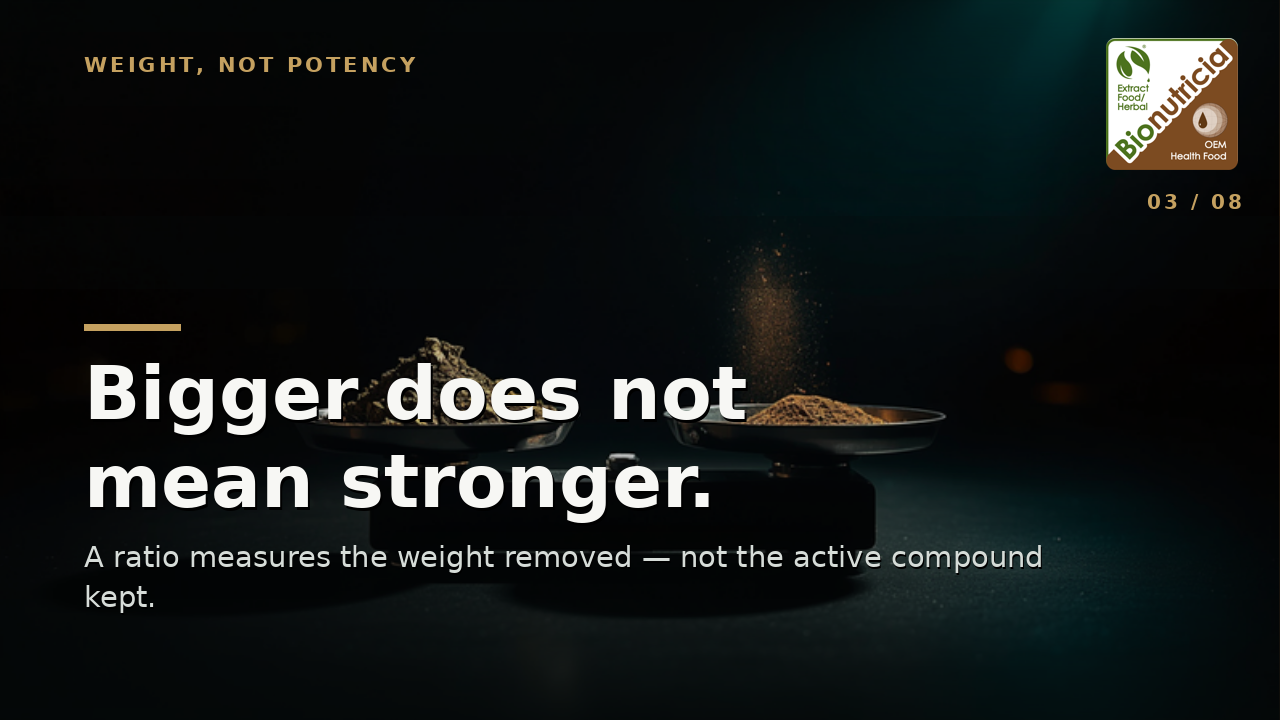
2. Weight removed is not medicine kept
Because it only tracks weight, a bigger ratio looks more powerful without being a potency claim at all. Concentrating biomass is not the same as concentrating the active compound. A high ratio with no marker specification is a number, not a guarantee.
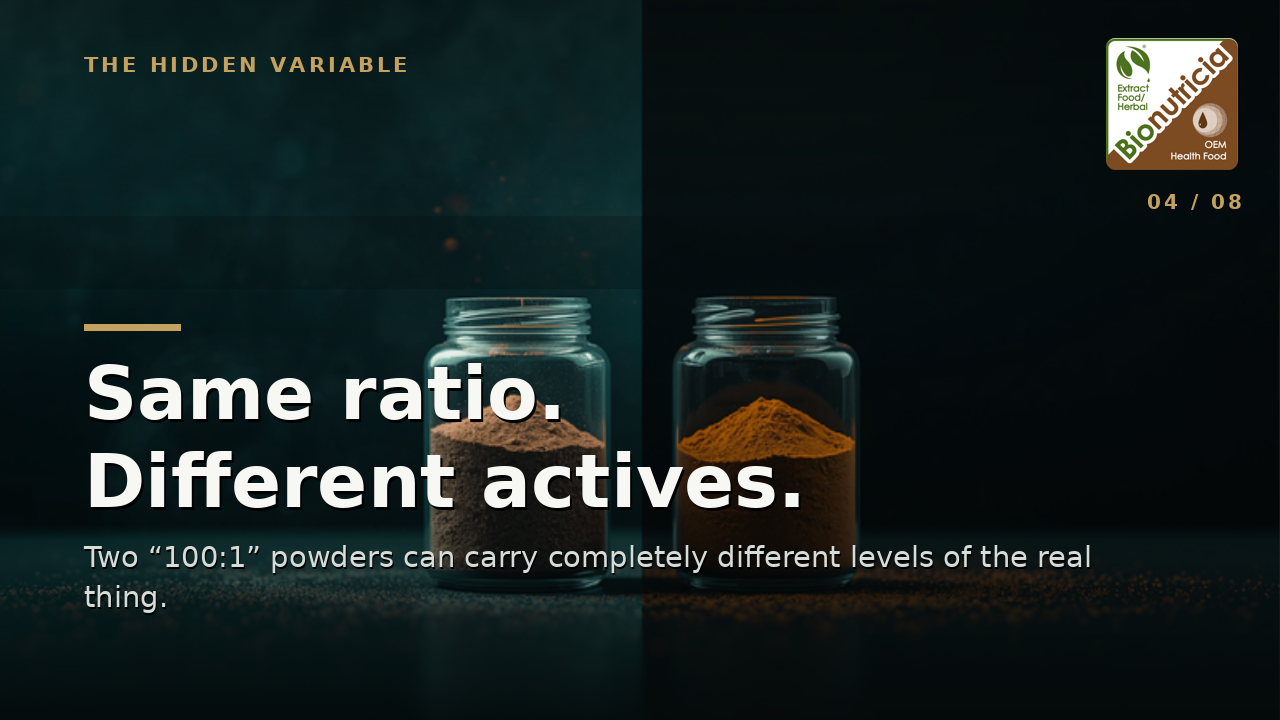
3. Same ratio, different actives
This is where buyers get caught. Two “100:1” powders can carry completely different levels of the active compound, depending on how they were made. The number on the label stays the same while the value inside it changes.
4. Process decides what survives
What actually determines potency is the process: the quality of the raw material, the solvent, the extraction temperature and time, and how the extract is stored. Each step changes what survives into the finished powder — and the ratio captures none of it.
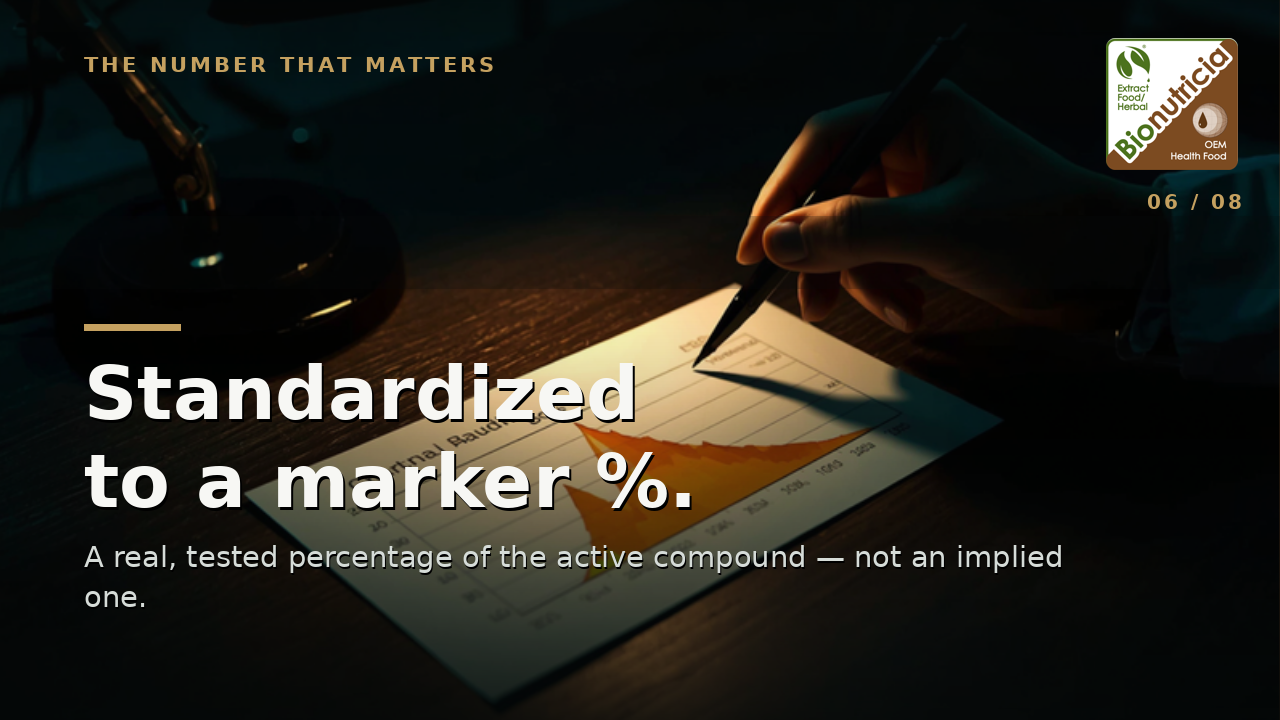
5. The number that matters: standardization
The specification a serious buyer checks is the standardization — the extract standardized to a named marker compound at a real, tested percentage. That percentage is a measured quantity of the active, verified by analysis (for example by H P L C), not implied by a ratio.
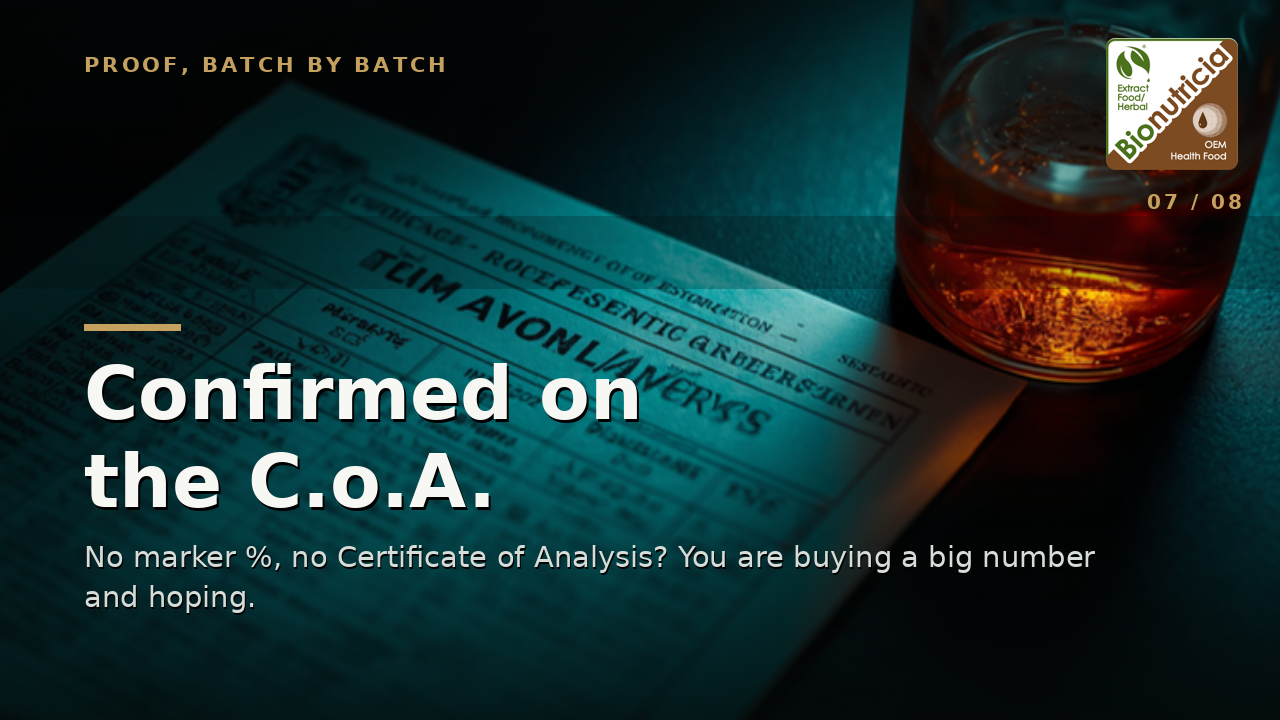
6. Proof, batch by batch
And that percentage has to be proven. A Certificate of Analysis (CoA) confirms the marker level batch after batch. If a supplier cannot show a marker percentage and a CoA, you are buying a big number and hoping.
The rule that survives
The ratio is the recipe; standardization is the dose. At Bionutricia — a Malaysian halal supplement OEM established in 2006, with 239+ brand partners, an in-house extraction patent (MY-188945-A) and six certifications (JAKIM Halal, FSSC 22000, US FDA, GMP, HACCP and MeSTI) — every extract ships standardized to a marker compound with a Certificate of Analysis. So the one question worth asking any supplier is simple:
“What’s it standardized to?” The answer separates a documented extract from a decorative number.
Frequently asked questions
What does “100:1” mean on a herbal extract? It is an extract (yield) ratio: 100 kg of raw botanical were processed to make 1 kg of extract. It describes weight reduction during concentration, not the level of active compound.
Does a higher extract ratio mean a stronger supplement? No. A ratio measures how much biomass was removed, not how much active compound remains. Two extracts at the same ratio can have very different potencies.
What actually determines an extract’s potency? The raw-material quality, solvent, extraction temperature and time, and storage — and, above all, whether it is standardized to a marker compound at a tested percentage.
What is a standardized extract? An extract standardized to contain a defined, tested percentage of a named marker compound (the active), verified analytically rather than implied by a ratio.
Why can two “100:1” extracts have different active levels? Because the ratio says nothing about how much active survived processing; different raw materials and methods give different marker percentages at the same ratio.
What is a Certificate of Analysis (CoA)? A batch document confirming the tested specification of an extract, including the marker-compound percentage, so buyers can verify potency batch by batch.
What should I ask an extract supplier? Ask what the extract is standardized to, and request the Certificate of Analysis. If they can only quote a ratio, you cannot verify potency.
Does Bionutricia standardize its extracts? Yes. Every Bionutricia extract ships standardized to a marker compound with a Certificate of Analysis, backed by an in-house extraction patent and six certifications, since 2006.
Request a standardized extract quote →
RELATED POSTS
View all

The 10-Gram Problem: Why 2026’s Biggest Supplement Trend Doesn’t Fit in a Capsule
August 19, 2026 | by supersuper


Article: Food as Medicine | Strawberry (Fragaria x ananassa, Rosaceae)
October 5, 2024 | by bionutriciaadmin