


Not Every Sachet Has the Dose: Blend & Content Uniformity Explained
August 2, 2026 | by supersuper
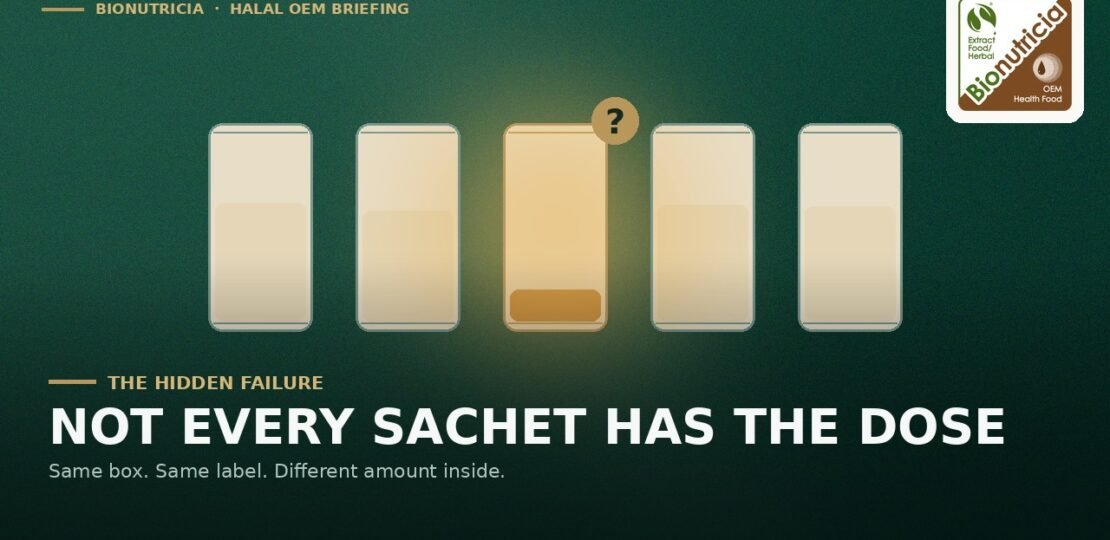
Every sachet in a box carries the same printed label, but that is a claim, not a proof. Whether each unit actually holds the stated dose comes down to blend and content uniformity: how evenly the active is dispersed through the powder, and whether anyone confirmed it stayed even all the way into the finished sachet. Here is how that failure happens, why a fill-weight check misses it, and what a real manufacturer does to guarantee the dose in every unit.
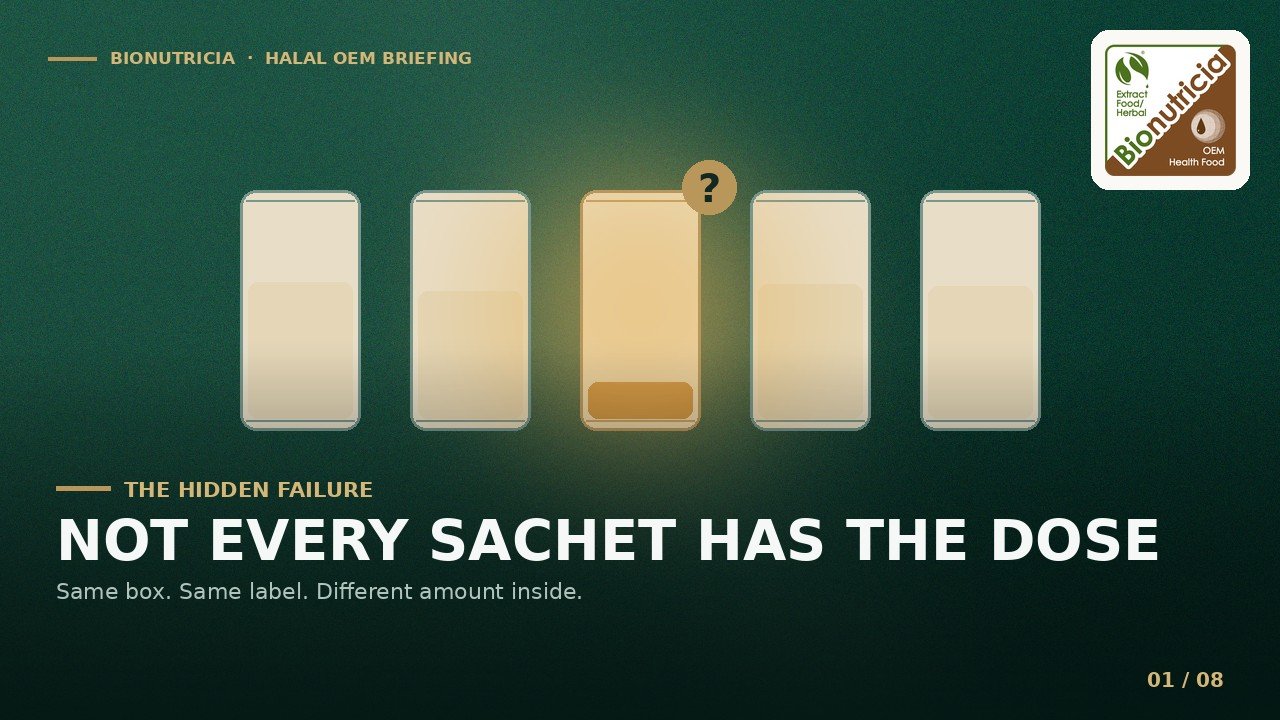
Not every sachet has the dose
Every sachet in a box carries the same printed label, but that is a claim, not a guarantee. Whether each unit actually holds the stated dose depends on one thing a buyer never sees: how evenly the active was distributed through the blend before filling. When that distribution is not controlled and proven, identical-looking sachets can hold very different amounts of active. This is blend and content uniformity, and it quietly decides whether your label is true.
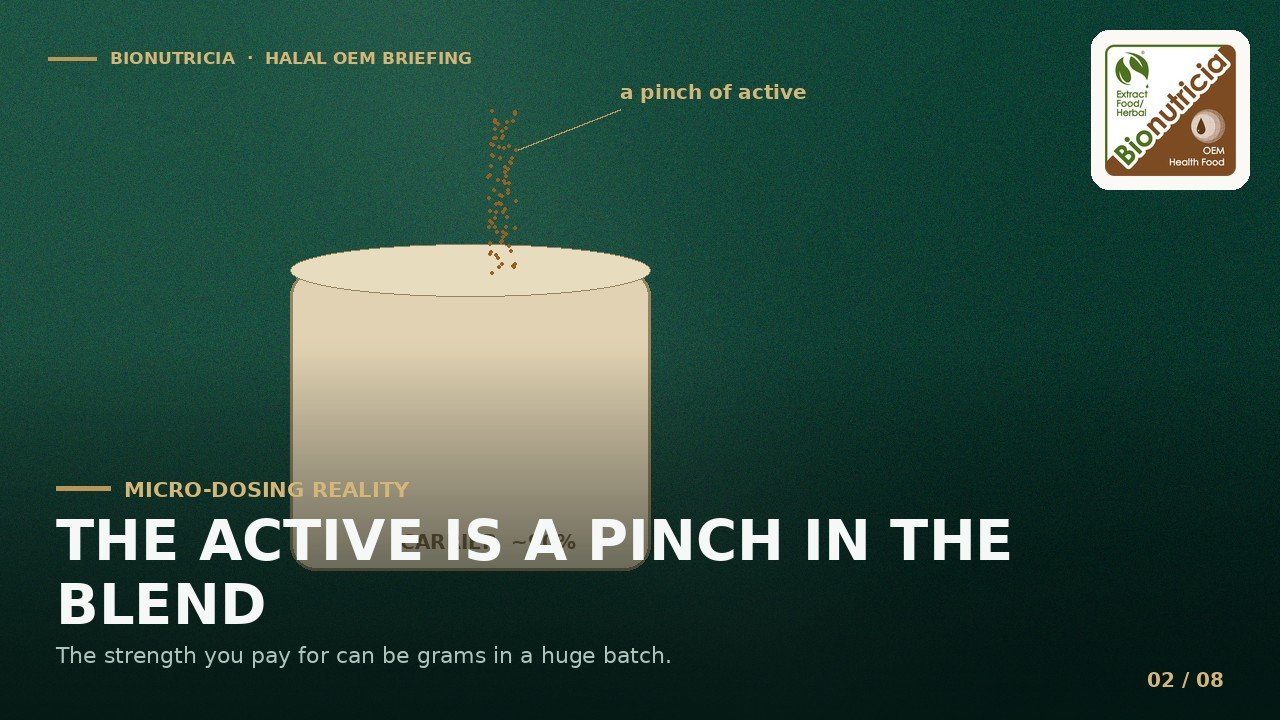
The active is a pinch in the blend
In most formulas the active you are actually paying for is a small fraction of the total powder, sometimes grams of active dispersed through kilograms of carrier, flow agent and flavour. The smaller the active fraction, the harder it is to spread perfectly through the mass, and the bigger the consequence if it clumps or drifts. A potent ingredient at a low inclusion rate is exactly the case where uniformity testing matters most.
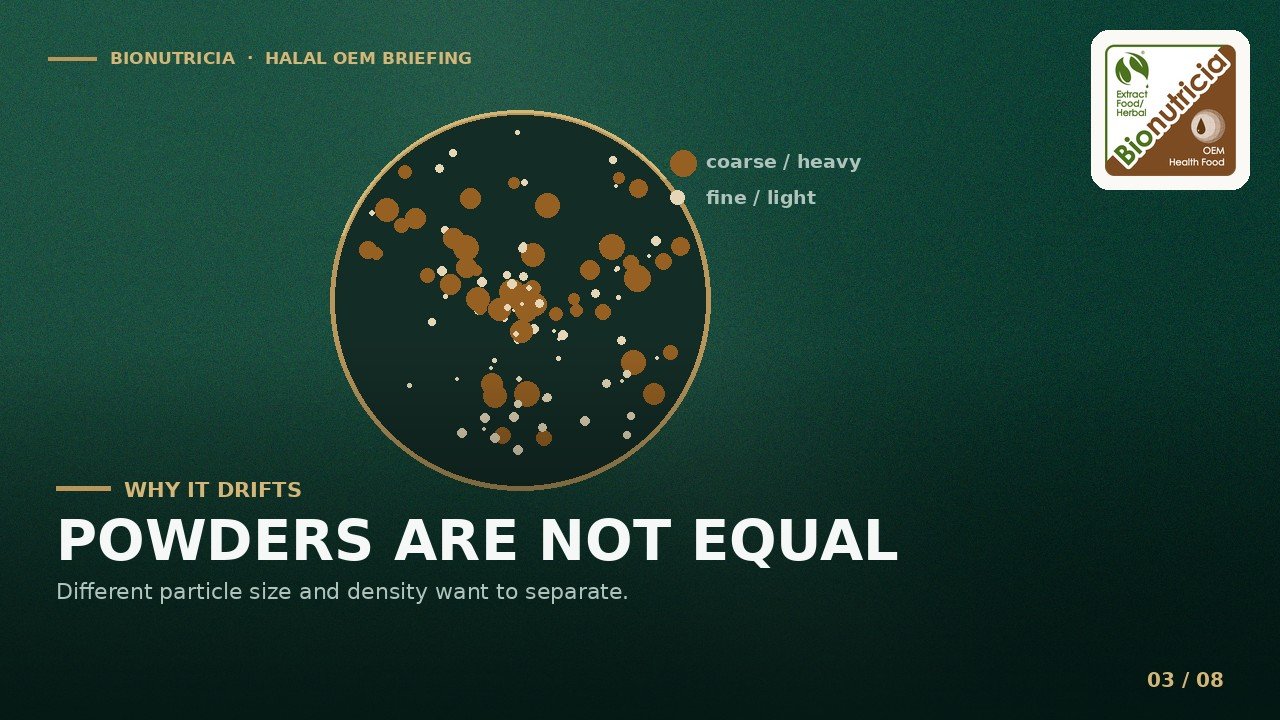
Powders are not equal
Powders differ in particle size, shape, density and static charge. Blend a fine, light active with a coarse, dense carrier and the two behave differently under the same handling. Those physical mismatches are what drive separation. It is not sloppiness, it is physics. A blend that looks perfectly mixed in the vessel can still be primed to separate the moment it is moved.
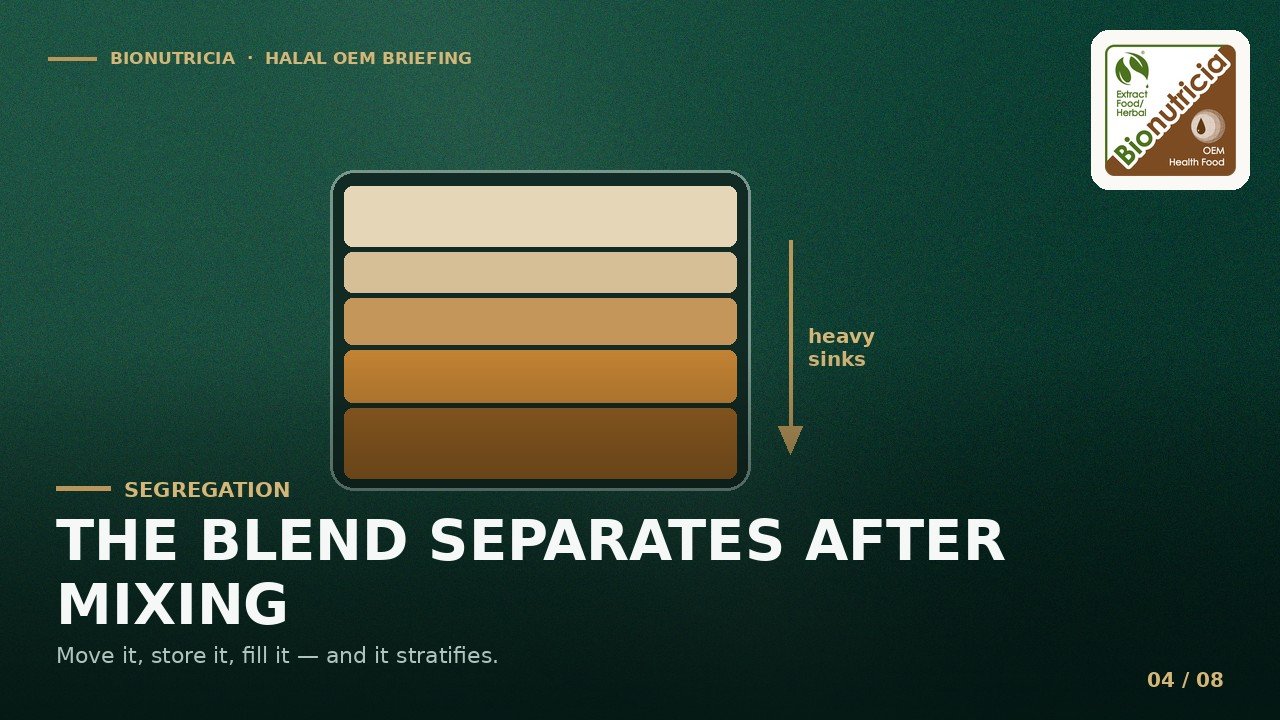
The blend separates after mixing
Segregation is separation that happens after mixing looks done: during transfer, conveying, hopper discharge, vibration in transit, even storage. Heavier or coarser particles migrate one way, fines another. So a blend can pass a mix-time check and still arrive at the filler non-uniform. This is why uniformity is tested at the point that matters, not just assumed from the mixer.
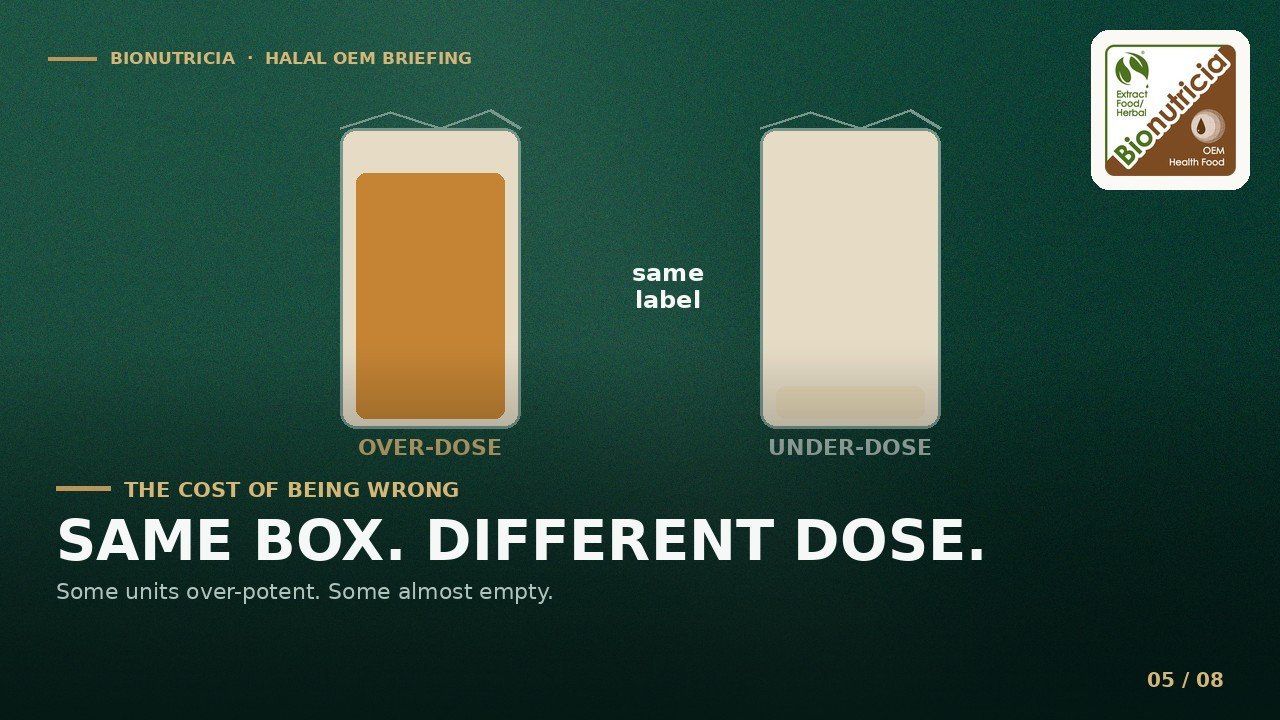
Same box, different dose
When a blend segregates, the filler meters out whatever is in front of it. Some sachets end up over-potent, some well under label. Same box, same artwork, different dose. For the brand that is the worst kind of failure: invisible on the shelf, exposed only when a lab tests the finished product, or when a customer or a regulator does.
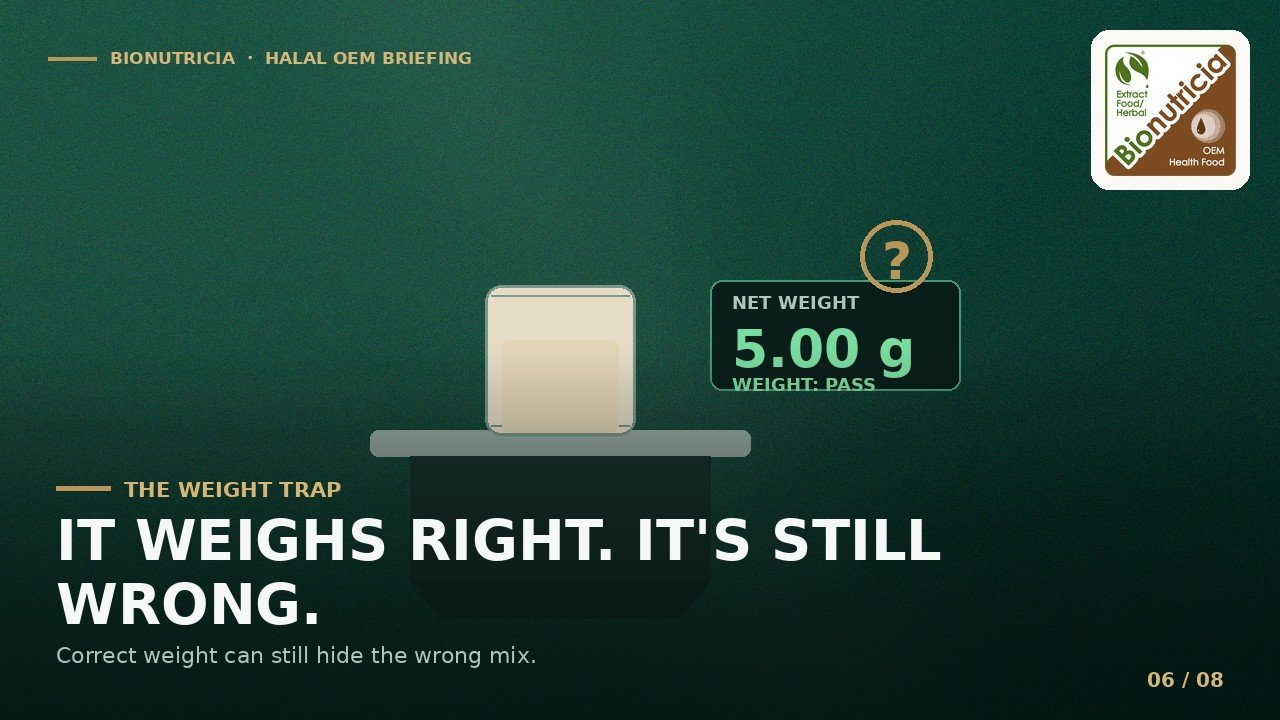
It weighs right – and it’s still wrong
Fill-weight checks are essential, but they only prove mass, not composition. A sachet can hit its target weight while carrying the wrong ratio of active to carrier: heavy on filler, light on active, or the reverse. Weight tells you how much powder is in the sachet; only an assay tells you how much active. Relying on the scale alone is the trap.
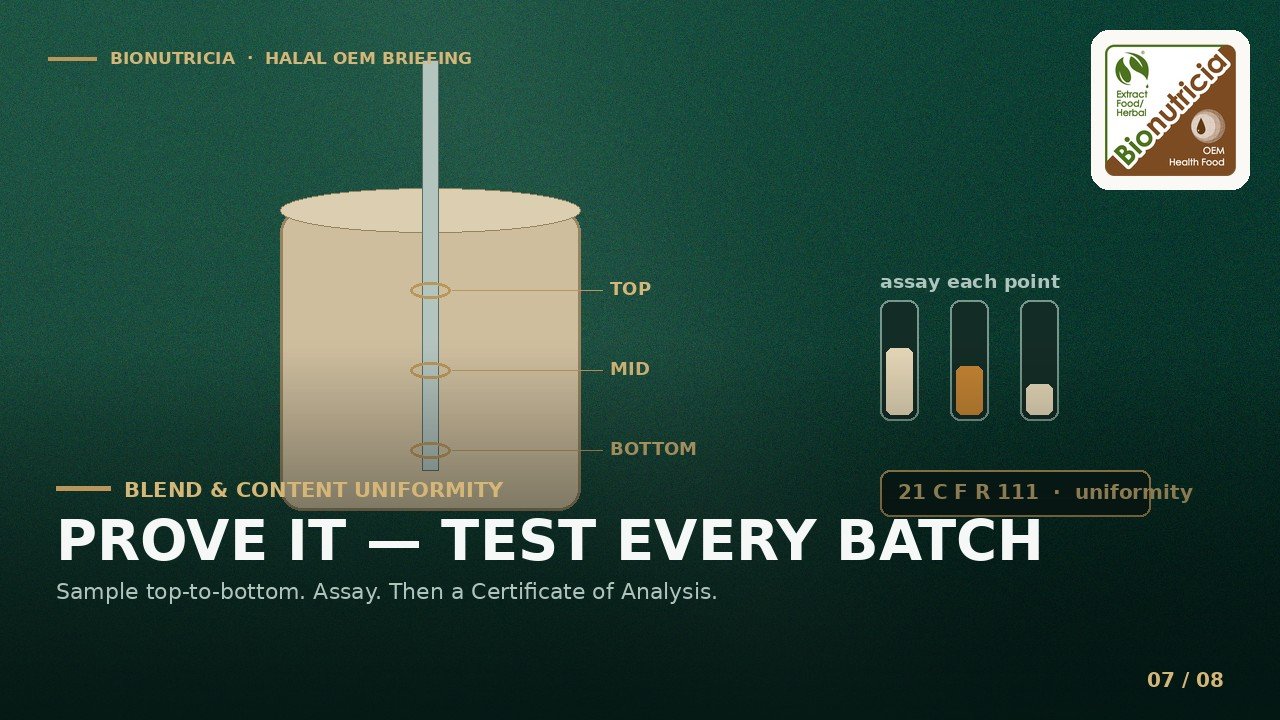
Prove it: test every batch
The control is straightforward and non-negotiable. Sample the blend at multiple points, top, middle and bottom, and assay each for the active. That is blend uniformity, and under twenty-one CFR one-eleven a blend that fails it cannot move forward to become finished product. Then test finished units for content uniformity, and issue a Certificate of Analysis for the batch. Testing at both stages is what turns a label number into a proven fact.
The rule that survives
The label prints the dose; a validated blend is what puts it in every sachet. At Bionutricia, uniformity is not an optional add-on. It is built into how each batch is formulated, blended, sampled and released, food-technologist-led and backed by six certifications. Before you approve any formula, ask one question: did anyone prove the dose is in every unit?
Frequently asked
What is content uniformity in a supplement? Content uniformity means every finished unit, every sachet, chewable tablet or serving, contains the same amount of active ingredient within a tight tolerance of the label claim. It is confirmed by assaying multiple finished units for the active, not just weighing them.
How is blend uniformity different from content uniformity? Blend uniformity is tested on the powder blend before filling, by sampling the blend at several points and assaying each. Content uniformity is tested on the finished, filled units. Blend uniformity confirms the mix is even; content uniformity confirms it stayed even through filling.
Why can two sachets from the same box contain different doses? Because the active can segregate. Differences in particle size and density cause the active and carrier to separate during transfer, filling, vibration or storage, so the filler meters slightly different compositions into different sachets unless the blend is validated and tested.
Does a fill-weight check catch a wrong dose? No. A weight check confirms how much total powder is in the unit, not the ratio of active to carrier. A sachet can be exactly on target weight and still be over- or under-dosed on the active. Only an assay measures the active.
What does a manufacturer do to guarantee the dose? A validated blending process, blend-uniformity sampling (top, middle and bottom) with assay, finished-unit content-uniformity testing, and a Certificate of Analysis per batch. Under twenty-one CFR one-eleven a blend that fails uniformity cannot proceed to finished product.
RELATED POSTS
View all


The Formula They Only Take Once: Why Supplement Taste Decides the Reorder
August 11, 2026 | by supersuper

What “100:1 Extract” Actually Means (And Why a Bigger Number Can Be Worse)
July 23, 2026 | by supersuper

Article: Food as Medicine | Banana (Musa spp., Musaceae)
October 5, 2024 | by bionutriciaadmin