

A Dusty Fill Is a Leaking Sachet: Seal Integrity in Supplement Contract Manufacturing
September 3, 2026 | by supersuper
Direct answer: a supplement sachet’s weakest barrier is usually the seal, not the laminate film around it. The film’s moisture barrier is specified once and measured in a laboratory (as WVTR); the seal is created fresh on the filling machine thousands of times per shift, and every one of those seals can be compromised by powder fines sitting on the seal line when the jaws close. Published peel-test data shows that powder contamination in the seal area cuts optimised seal strength by roughly 16–79% depending on the sealant material — even after machine settings are re-tuned for it — and drops leak-tightness from 10/10 to as low as 7/10 (Bamps et al., 2019). Seal integrity is therefore a specification and a test plan — seal strength under ASTM F88, leak testing by dye penetration, and stability run in the finished, filled, sealed pack — not an assumption. Bionutricia treats the seal as part of the formulation brief across its powder, liquid and gel sachets, pouch beverages, chewable tablets and liquid bottles.

Why the seal, not the film, is the usual failure point
A packaging brief normally specifies the laminate: the print web, the barrier layer, the sealant, and a water vapour transmission rate. That covers the faces of the sachet. But the sachet’s edges — the seals — are not bought from the film supplier; they are manufactured on the form-fill-seal machine at the moment of filling. Jaw temperature, dwell time, pressure, the sealant resin’s behaviour, and how much product dust reaches the seal line together decide whether each individual sachet is actually closed.
This is why two batches in the identical laminate can age completely differently. The film’s barrier did not change; the seals did. A hygroscopic powder does not need bulk water to fail — it only needs to gain a little moisture through whatever path is open, and a micro-channel through a seal is a far faster path than permeation through an intact barrier layer.
Seal strength is a number — put it on the specification
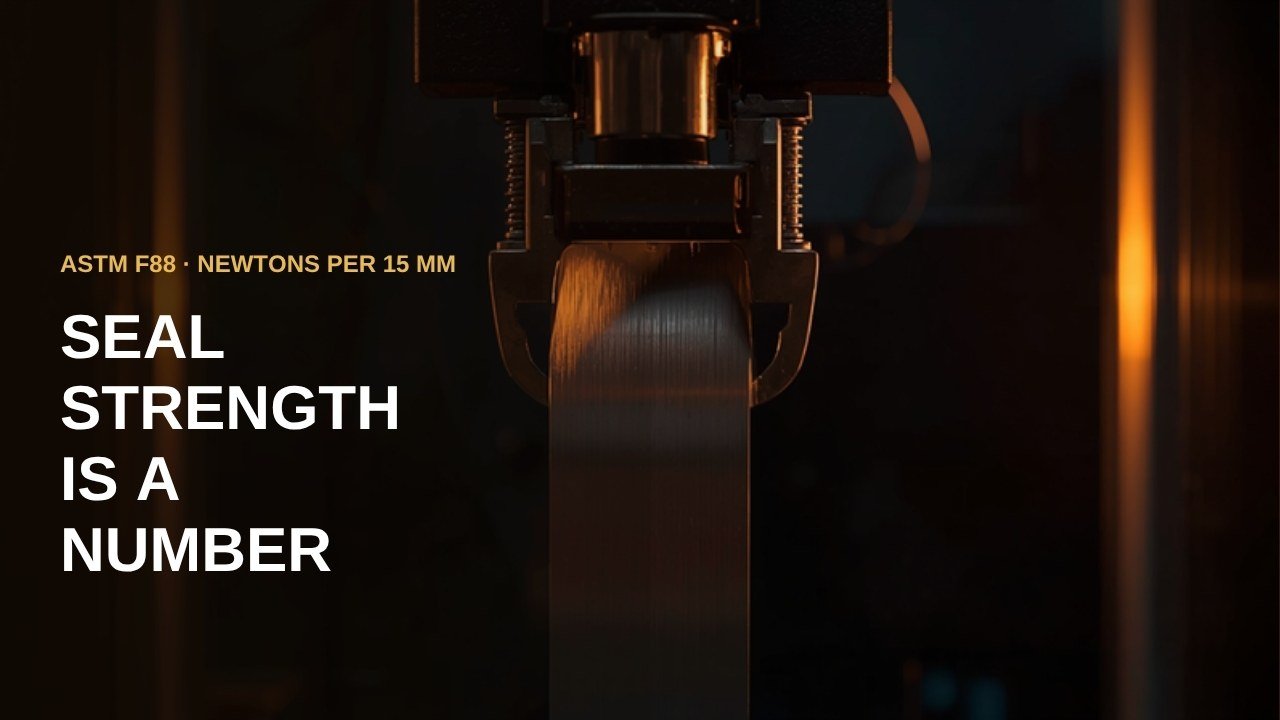
Seal strength is measured by a peel test under ASTM F88: strips of the sealed laminate, typically 15 mm wide, are pulled apart in a tensile tester, and the maximum force is divided by the seal width. The result is reported in newtons per 15 mm (or N/mm). Alongside it sits hot tack — the strength of the seal while it is still hot, which decides whether a just-formed seal survives the weight of product landing on it during filling. Both are routine measurements; neither appears on most brand specifications.
A workable sachet specification names the laminate structure, the WVTR, a minimum seal strength, and the leak-test method and acceptance level — the same way it names an active’s assay. If the specification only says “silver laminate, three-side seal”, the seal is running on assumption.
A dusty fill is a leaking sachet
The single most preventable seal failure is seal-through-contamination. Powder sachet fillers generate fine dust; some of it settles on the inner sealant surface exactly where the jaws will close. The heated jaw then seals through the fines. Some particles are encapsulated harmlessly by the molten sealant — and some are not, leaving channels across the seal width.
The consequence is measurable. In the peer-reviewed dataset below, researchers deliberately applied 25 g/m² of fine powder to the seal area of three typical polyethylene-based packaging films, re-optimised the sealing parameters for each condition, and measured what remained of the seal:
Two things in that dataset matter for buyers. First, contamination cost seal strength even after the machine was re-tuned for it — fines control at the filler (dust extraction, fill-tube design, seal-area shielding) cannot be replaced by hotter jaws. Second, the sealant resin mattered enormously: the plastomer-based seal layer lost the least strength, kept the widest process window, and stayed leak-tight, while the sodium-ionomer layer lost up to 79% (Bamps et al., 2019; the mechanism review by Ilhan and colleagues, 2021, reaches the same conclusion across the wider literature: contamination lowers seal strength and narrows the sealing window).
How moisture actually gets past a sealed sachet
Mechanistically there are three routes in, and they respond to different controls. Permeation through the film is slow and continuous — it is what the WVTR certificate describes, and the barrier layer sets it. Channel leaks through the seal are fast and local — they are created in production and found by leak testing, not by reading the film certificate. Flex-cracks are the third route: aluminium foil is a near-zero barrier until it is creased, and transit handling or gusset folds can open microscopic cracks in it. A stability claim built only on the first route quietly assumes the other two never happen.
They look the same on the reel — metallised film, foil and the sealant
Metallised PET and true aluminium foil look identical wound on a reel, but they are different barriers with different flex behaviour, and swapping one for the other — or changing the film supplier — changes the seal as well as the barrier, because the sealant resin and its sealing window come with the laminate. A supplier change that “looks the same” therefore re-opens seal validation and, as the shelf-life guide on this site covers, the stability claim itself.
The sealant layer also takes your flavour
One more property rides on the same inner layer that forms the seal: it is in permanent contact with the product. Polyolefin sealants absorb aroma compounds over time — the packaging-science term is flavour scalping — so a citrus or pandan top note can weaken on shelf without any moisture failure at all. For flavour-led sachet products, sealant selection and a sensory check inside the real stability study are the practical controls.
How to specify — and prove — a sachet seal
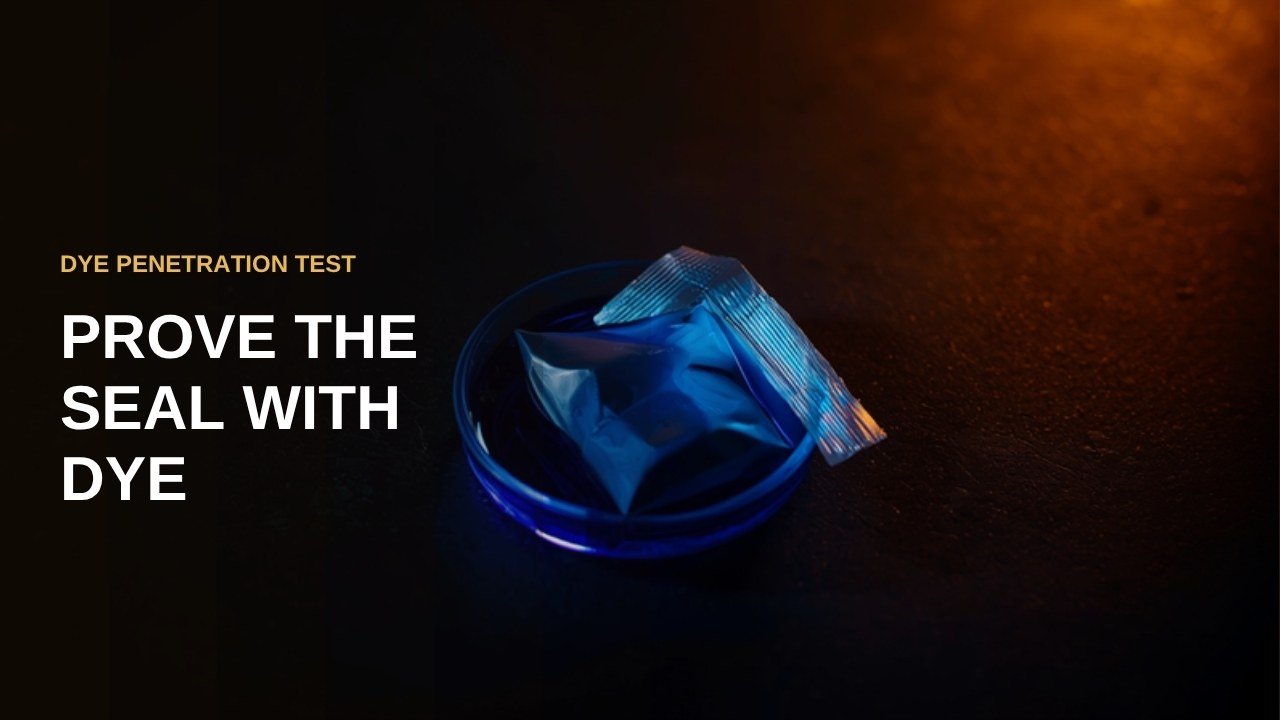
The checklist Bionutricia works to on sachet and pouch-beverage projects: name the laminate structure and WVTR; set a minimum seal strength under ASTM F88 and confirm hot tack for the fill speed; control fines at the filler so the seal line stays clean; leak-test production seals by dye penetration at start-up and at intervals through the run; and run the stability study in the finished, filled, machine-sealed pack under conditions that reflect the real distribution climate. Data from a different pack is not your data — and a seal that has never been measured is not a specification, it is a hope.
Related guides
- How Packaging Affects Supplement Shelf Life: Barrier Properties, Format Choices & What Extends (or Shortens) Your Expiry Date
- Supplement Stability Testing Explained: ICH Zones, Shelf Life & What Buyers Ask
- Water Activity vs Moisture Content: Why a “Dry” Supplement Powder Still Grows Mould
References
- Bamps B, D’huys K, Schreib I, Stephan B, De Ketelaere B, Peeters R. Evaluation and optimization of seal behaviour through solid contamination of heat-sealed films. Packaging Technology and Science. 2019;32(7):335–344. https://doi.org/10.1002/pts.2442 (open access)
- Ilhan I, Turan D, Gibson I, ten Klooster R. Understanding the factors affecting the seal integrity in heat sealed flexible food packages: a review. Packaging Technology and Science. 2021;34(6):321–337. https://doi.org/10.1002/pts.2564
- ASTM F88/F88M — Standard Test Method for Seal Strength of Flexible Barrier Materials. https://store.astm.org/f0088_f0088m-21.html
Frequently asked questions
What is seal integrity in supplement sachet manufacturing?
Seal integrity is the ability of a sachet’s heat seal to keep moisture, oxygen and micro-organisms out (and product and aroma in) for the whole shelf life. It is specified through seal strength (measured under ASTM F88 in newtons per 15 mm), verified with leak tests such as dye penetration, and proven by running stability studies in the finished, filled, sealed pack.
How is sachet seal strength measured?
By a peel test under ASTM F88: a strip of the sealed laminate, typically 15 mm wide, is pulled apart in a tensile tester and the maximum force is divided by the seal width. The result, in newtons per 15 mm (or N/mm), belongs on the packaging specification next to the film’s WVTR.
Why do sealed sachets still leak?
Mostly because of what happens at the seal line during filling. Fine powder dust settles on the seal area and the heated jaw seals through it, leaving micro-channels. Published peel-test data shows powder contamination cuts optimised seal strength by roughly 16–79% depending on the sealant resin, and drops dye-penetration pass rates from 10/10 to as low as 7/10.
What is flavour scalping in sachet packaging?
The inner polyolefin sealant layer that forms the seal is in permanent contact with the product, and over time it absorbs aroma compounds — so a flavour can weaken without any moisture failure at all. Sealant choice and stability testing in the final laminate are the practical controls.
Should stability testing use the final sachet or a lab container?
The finished, filled, machine-sealed sachet. A stability study run on bulk powder in a jar, or in a hand-sealed pouch of a different laminate, does not carry over — the production seal is part of the barrier being tested.
Can Bionutricia specify and test sachet seals for my product?
Yes. Bionutricia’s formulation and packaging consultation covers laminate structure, seal-strength specification, leak testing and stability planning in the final pack across its powder, liquid and gel sachet and pouch-beverage formats.
Ready to put a seal specification on your next sachet SKU?
Vertically integrated OEM manufacturing under FSSC 22000, GMP, HACCP, JAKIM Halal, US FDA and MeSTI certification, with seal-strength specification, leak testing and stability planning matched to the product across powder, liquid and gel sachets, pouch beverages, chewable tablets and liquid bottles. Free formulation consultation and a fast RFQ turnaround.
Request a quotation · See our OEM services · View our certifications
WhatsApp: +60 16-661 8510
Article by Bionutricia R&D Team. Last updated: September 3, 2026.
RELATED POSTS
View all


Supplement OEM for Duty-Free & Airport Travel-Retail Wellness Brands
September 11, 2026 | by supersuper
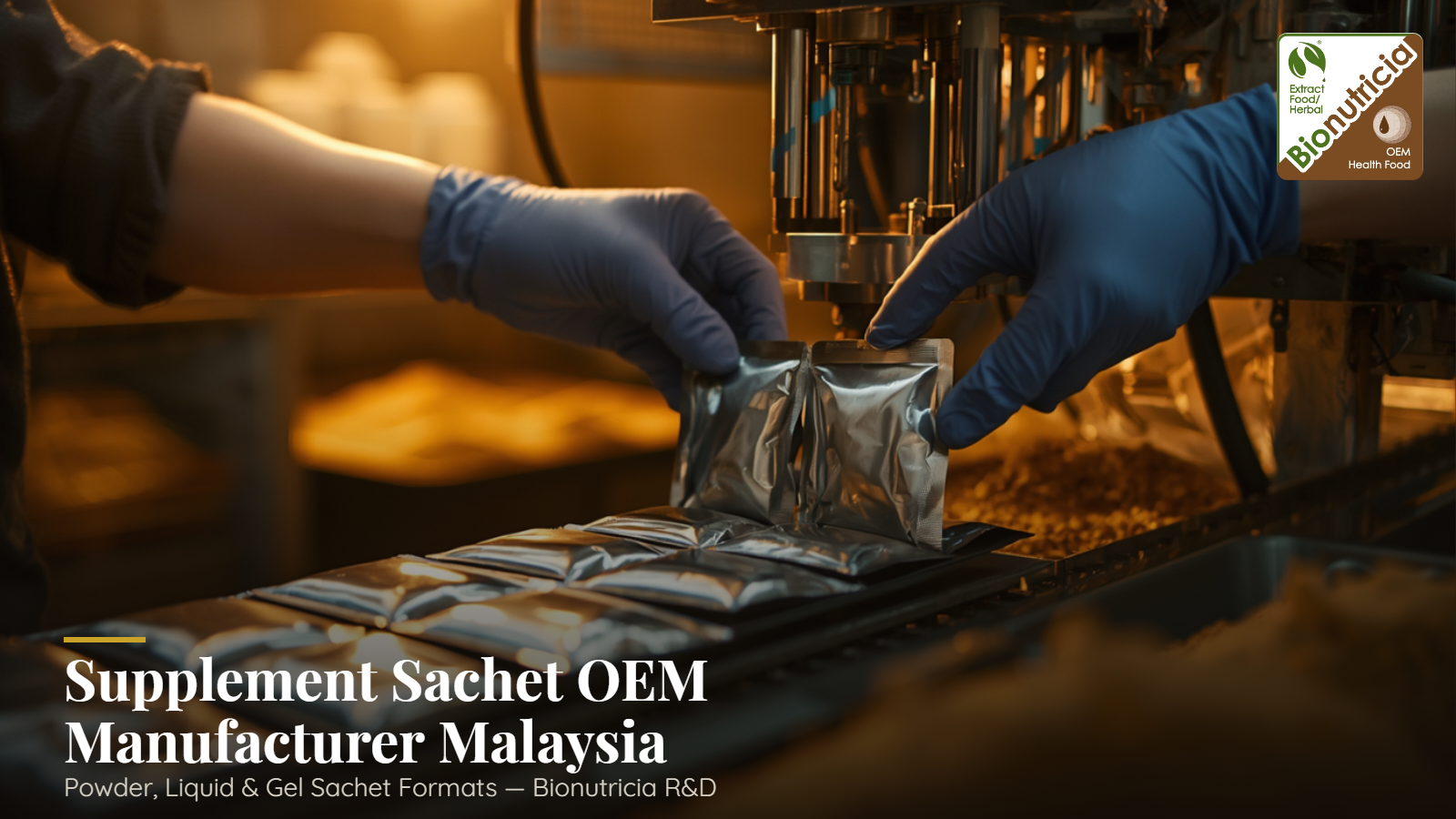
Supplement Sachet OEM Manufacturer Malaysia: Powder, Liquid & Gel Sachet Formats
September 25, 2026 | by supersuper