

The Clear Protein Wave: Why 2026’s Hottest Protein Pours Like Water — and How a Halal Brand Wins It
September 11, 2026 | by supersuper
Direct answer: the fastest-moving protein product of 2026 does not look like protein at all. “Clear protein” — whey isolate or hydrolysed collagen dissolved into a transparent, juice-style drink — is now the format driving the category: industry launch tracking reports that around 75% of new protein powder launches feature clear whey, Optimum Nutrition and Myprotein both brought clear ranges to market in 2026, and the ready-to-drink protein market is forecast to grow from US$2.11 billion in 2026 to over US$3 billion by 2031. The catch is chemistry: a protein drink is only transparent when the formulation solves four problems at once — protein purity, pH, astringency and heat — and the halal documentation behind a clear whey or collagen SKU is harder than most brand briefs assume. The brands that win this wave will treat clarity as a formulation discipline and certify the protein chain end to end. The brands that lose it will discover that a cloudy, sour or non-certifiable drink is the default outcome of an under-specified brief.

Why protein suddenly looks like water
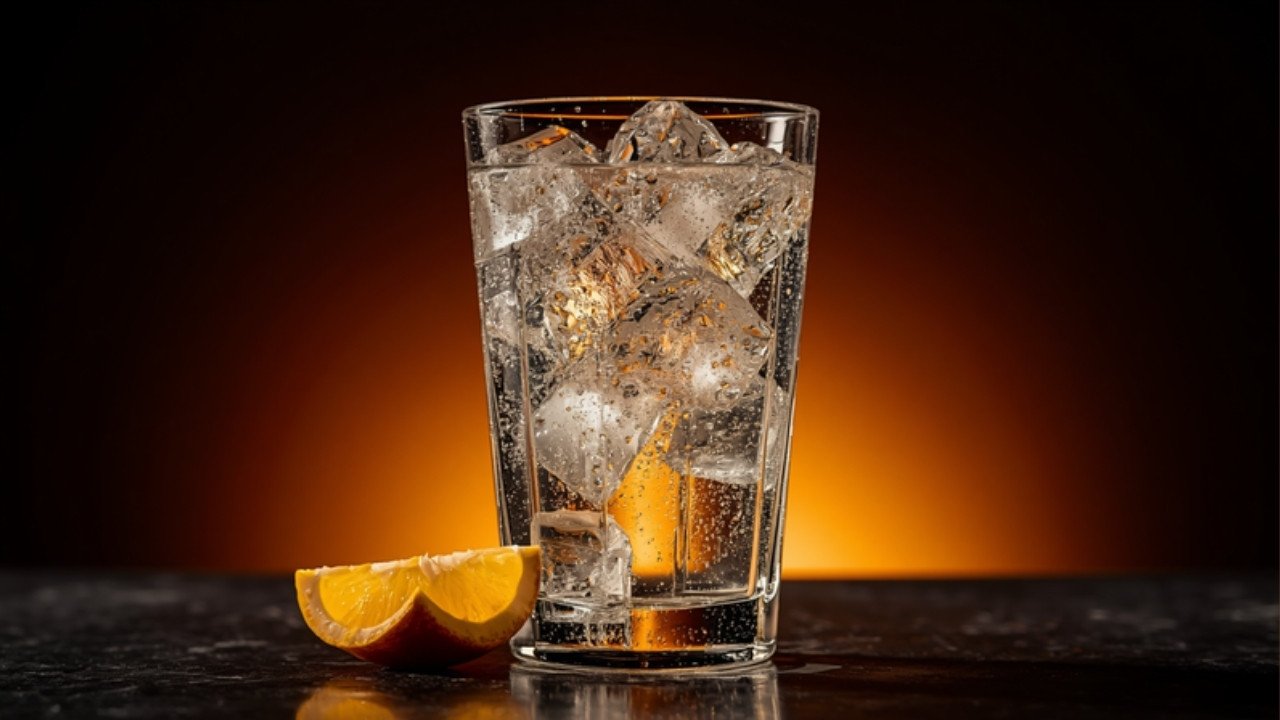
The protein category spent two decades perfecting the milkshake — and then discovered the milkshake was the ceiling. Industry launch tracking by Nutrition Integrated reports that around 75% of new protein powder launches now feature clear whey, and the biggest names in sports nutrition have moved with the trend rather than against it: Optimum Nutrition launched Clear Whey in the UK in June 2026 alongside a portfolio that already includes clear collagen, clear plant protein and protein water; Nichols and THG announced a ready-to-drink Myprotein Clear Whey Protein Water range for September 2026 carrying 15 g of protein per serve, sugar-free; and Bloom Nutrition opened the year with a juice-style clear protein powder built on whey isolate and collagen peptides.
The market numbers behind those launches are steep on both sides of the format. Clear whey protein as an ingredient category is forecast to grow from roughly US$618 million in 2026 to US$980 million by 2033, while the ready-to-drink protein beverage market climbs from US$2.11 billion in 2026 toward US$3.06 billion by 2031 — inside a total protein supplements market projected to double from US$31.9 billion to US$63.2 billion by 2033. The strategic point for a brand owner is where those curves intersect: a clear protein liquid in a single-serve pack is simultaneously the fastest-growing powder positioning and the fastest-growing beverage positioning. And in Muslim-majority markets there is a further asymmetry worth naming plainly: the Western brands driving the wave rarely carry recognised halal certification, while Southeast Asia’s premium beverage shelf is exactly where lifestyle-protein positioning is heading. The gap is the opportunity.
Why clear protein sells to people shakes never reached
A conventional protein shake makes a public statement: this person is training. Industry trend analyses consistently estimate that the large majority of consumers who want more protein in their day — figures around 70% are cited — do not think of themselves as gym-goers, and the thick, dairy-heavy sensory profile of a shake is a real adoption barrier for them. A clear protein drink deletes that barrier. It looks and drinks like flavoured water or juice, it leaves none of the coating mouthfeel of a milky shake, and it slots into occasions a shake never reached: the office desk, the café chiller, the school run, post-badminton hydration. That is why the format’s growth is coming disproportionately from new protein consumers rather than from cannibalised shake sales — it is expanding the category, which is precisely the kind of wave a brand can ride with a first SKU rather than fight incumbents for.
The chemistry of clarity: why most protein drinks are cloudy
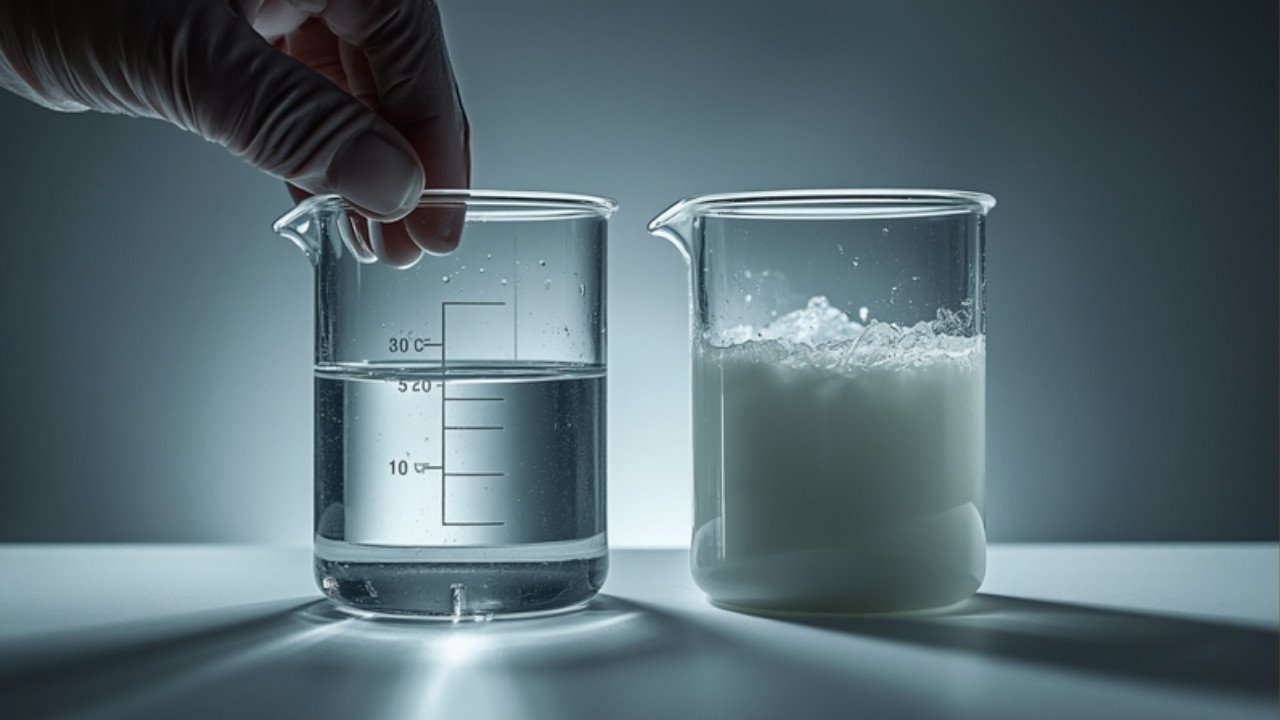
Transparency in a protein drink is not a filtration trick — it is protein chemistry, and it is worth a brand owner understanding the one diagram that decides the entire format. Proteins carry electrical charge, and that charge depends on pH. At its isoelectric point — around pH 4.9–5.3 for the main whey proteins — a protein carries no net charge, the molecules stop repelling each other, and they aggregate into particles large enough to scatter light. That is cloudiness, and with enough heat it becomes curdling. Move the pH well away from the isoelectric point and the proteins pick up charge again, repel each other, stay small and dissolved — and the drink turns clear.
Clear protein beverages live on the acid side of that map: published formulation guidance targets roughly pH 2.5–3.5 for a genuinely transparent whey drink, which is juice-level acidity. Getting there in a real product imposes four simultaneous requirements. First, protein purity: only a high-purity whey protein isolate stays clear — the fat and residual solids in a concentrate scatter light no matter what the pH does. Second, the mid-pH trap: between roughly pH 3.5 and 4.5 the formulation sits close to the isoelectric zone, where it will haze or sediment without stabilisers — the clean-label answer is not to park the product there at all. Third, astringency: at low pH, positively charged whey proteins interact with salivary proteins to produce a dry, puckering mouthfeel, and published sensory work shows the choice of acid system measurably changes how astringent the same protein tastes. Fourth, heat discipline: even on the right pH, thermal abuse during processing denatures whey protein and pushes it toward aggregation — the same lesson every dairy-protein beverage has to learn, applied at juice-level pH.
The pharmacology: the protein inside the water still has to work
A lighter format raises a fair question — is a juice-style drink at 15–20 g protein doing what a 30 g shake does? The published evidence is reassuring on the fundamentals. Dietary protein’s effect runs through digestion into an aminoacidemia — a rise in blood amino acids — in which leucine acts as the signalling trigger, activating the mTORC1 pathway that switches on muscle protein synthesis; whey is among the richest common proteins in leucine, and its rapid gastric transit produces exactly the fast, high amino-acid peak that drives the response. Hydrolysed collagen behaves differently — rich in glycine, proline and hydroxyproline, the substrate amino acids of connective tissue, but low in leucine — which is why serious formulations treat collagen as a complement to a complete protein rather than a replacement for one.
On outcomes, the benchmark dataset is a systematic review and meta-analysis in the British Journal of Sports Medicine: across 49 randomised controlled trials and 1,863 participants, protein supplementation significantly augmented resistance-training gains in both strength and fat-free mass, with a dose-response that plateaued at a total intake of about 1.6 g of protein per kilogram of body weight per day (Morton et al., 2018). Two practical readings for a brand owner: first, the effect belongs to total daily protein — so a 15–20 g clear drink is a legitimate contribution to the same evidence-backed intake, not a diluted gimmick; second, the plateau means “more per serve” is not automatically better, which is convenient, because 15–20 g per serve is also where a clear, palatable low-pH drink is technically comfortable.
The halal documentation chain behind a clear protein SKU
Here is the part of the brief that decides whether a clear protein product can ever carry a recognised halal logo — and it starts further upstream than most brand owners expect. Whey is a by-product of cheesemaking. Its halal status is therefore inherited from the cheese vat it came out of: the rennet or coagulating enzymes used (microbial and fermentation-produced enzymes present a clean chain; animal rennet raises origin-and-slaughter questions), the cultures and processing aids, and the downstream ion-exchange or membrane processing that turns whey into a high-purity isolate. Two tubs of “whey protein isolate” with identical nutrition panels can sit on opposite sides of a halal audit purely because of what happened in the cheese plant. Hydrolysed collagen adds a layer on top: species (bovine or marine — and never porcine, which contaminates a large share of the world’s cheap collagen supply), slaughter-chain certification for bovine material, and the hydrolysis processing aids. Plant proteins — pea and soy — carry the simplest documentation chain of the three, which is one reason dairy-free clear-style positionings are attractive in halal-first markets. And in every case the protein is only part of the audit: the acid system, flavours, sweeteners and any clouding or stabilising agents all pass through the same gate, verified by a recognised body such as JAKIM at the finished-product level. This is the same carrier-and-excipient logic covered in our guide to why the “other 90%” of a formulation decides its claims — applied to the hardest-working 20 g in the bottle.
Format is where the wave meets the factory
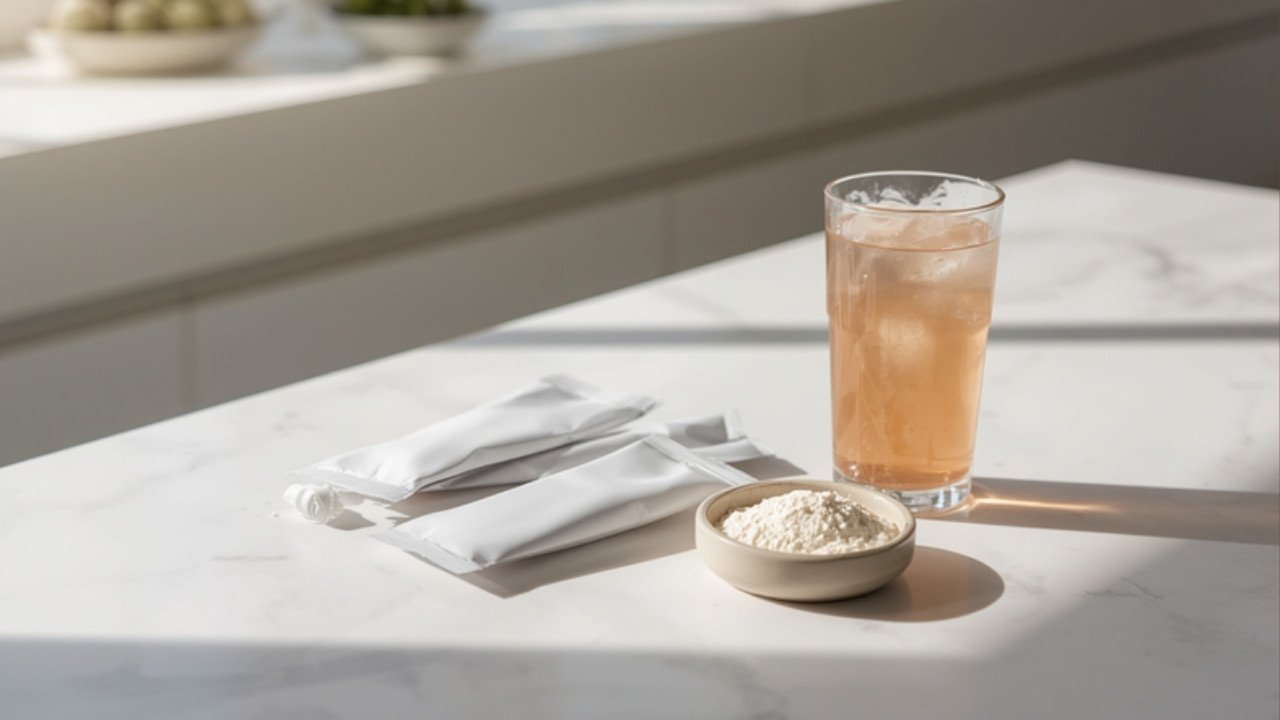
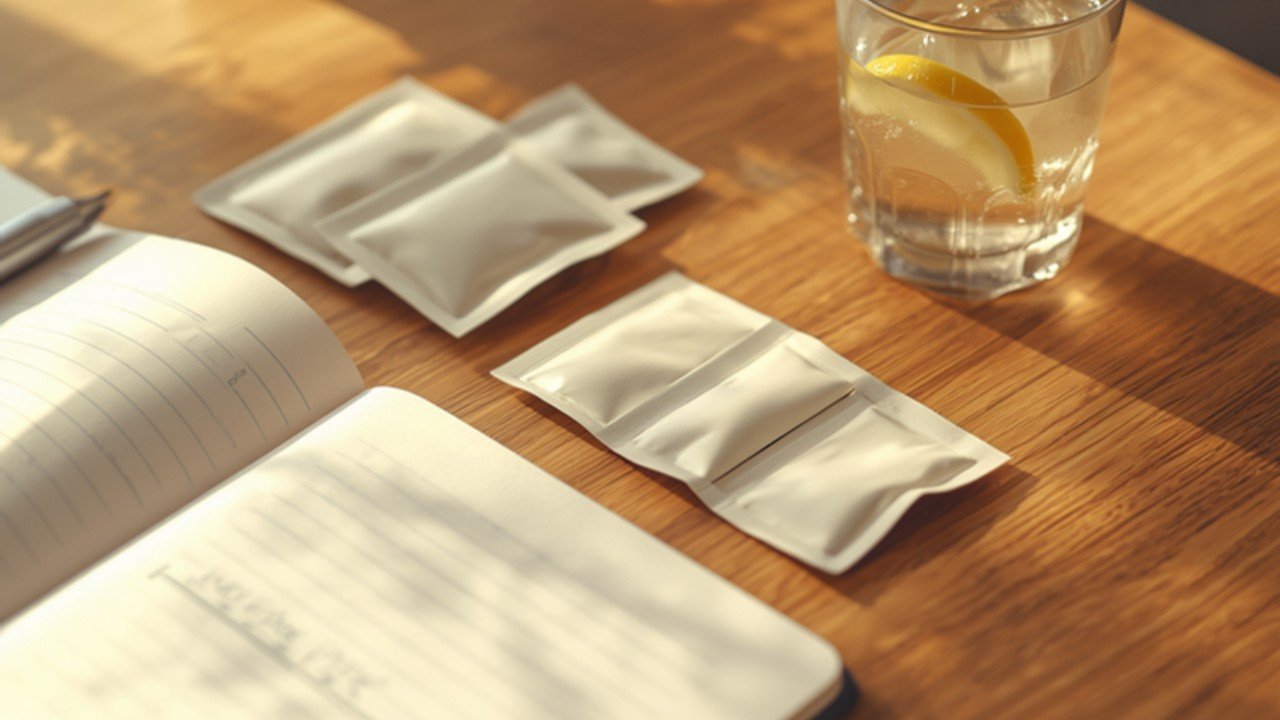
A clear protein concept becomes real in one of three formats, and each has a different engineering profile. A powder stick sachet — clear whey isolate pre-blended with the acid system, flavour and sweetener, reconstituted in cold water — is the fastest and most stable route: no thermal processing of the protein at all, the lowest logistics weight, and the drinker sees the clarity happen in the glass, which is its own marketing. A ready-to-drink pouch beverage or liquid bottle delivers the convenience position the Myprotein-style launches occupy, and in return demands the full beverage discipline: a thermal process chosen for a low-pH protein system, clarity that survives it, and shelf-life proven rather than assumed — the same shelf-stable-versus-refrigerated decision tree covered in our functional-beverage guide. A liquid sachet sits between the two for single-serve trial and travel. The honest sequencing for most first-time protein brands is powder-first: prove the flavour system and the position in the low-risk format, then extend the identical branding into the ready-to-drink pack once velocity justifies beverage-line economics.
Ladder the hero into a range
The clear-drink wave rewards the same range architecture every successful trend does — one hero, several doors. A clear whey isolate drink anchors the transparent juice-style position; a halal-certified collagen variant opens the beauty-from-within crossover the category is already borrowing from; a pea or soy version answers the dairy-free, plant-first brief with the simplest halal chain of all — both proteins sit in the same ingredient library, alongside colostrum for the premium immune-positioned end of the dairy shelf. And because a clear drink is a visual product, the botanical library does double duty: butterfly pea flower extract turns a clear base vivid blue-violet naturally, yuzu and calamansi extracts give the citrus identity Southeast Asian palates already love, and roselle brings both colour and tartness from a single halal-certified botanical. One brief, answered from one certified ingredient shelf, becomes a shelf-owning range rather than an orphan SKU.
Related guides
- Marine vs Bovine Collagen for a Halal Supplement Brand
- Pouch Beverage vs Bottled Liquid Supplement: Which Format for Your Brand?
- It’s Basically Salt Water: Inside the Halal Electrolyte Stick-Pack Opportunity
References
- Morton RW, Murphy KT, McKellar SR, et al. A systematic review, meta-analysis and meta-regression of the effect of protein supplementation on resistance training-induced gains in muscle mass and strength in healthy adults. British Journal of Sports Medicine. 2018;52(6):376–384. https://doi.org/10.1136/bjsports-2017-097608 (open access)
- Wisconsin Center for Dairy Research. Formulating Dairy Protein Beverages — pH, isoelectric point and clarity guidance. cdr.wisc.edu
- Pham LB, et al. Sources of soapy off-flavor in clear acidic whey protein beverages — acid type and astringency findings. Journal of Dairy Science (open-access article, 2025). ncbi.nlm.nih.gov
- Grand View Research. Clear Whey Protein Market Size & Share Report, 2026–2033. grandviewresearch.com
- Mordor Intelligence. Ready-to-Drink Protein Beverages Market, 2026–2031. mordorintelligence.com
- Nutraingredients. Optimum Nutrition launches Clear Whey in UK to capture “lifestyle performance” market (22 June 2026). nutraingredients.com
- Nutrition Insight. Nichols and THG unveil Myprotein Clear Whey Protein Water for UK functional beverage market (2026). nutritioninsight.com
Frequently asked questions
What is clear protein?
Clear protein is a protein drink or powder — usually built on high-purity whey protein isolate or hydrolysed collagen — formulated at low pH so the protein stays fully dissolved and the liquid is transparent, like a juice or flavoured water rather than a milky shake. Typical products carry 15–20 g of protein per serving with little or no sugar.
Why does clear protein need whey isolate instead of whey concentrate?
Clarity requires that nothing in the drink scatters light. Whey protein concentrate contains residual fat and other milk solids that make a liquid hazy at any pH, while a high-purity isolate is almost entirely protein, which can be held fully dissolved — and therefore transparent — when the drink is formulated well below the protein’s isoelectric point.
Why are clear protein drinks sour or astringent?
Transparency requires juice-level acidity, around pH 2.5–3.5, and at that pH positively charged whey proteins interact with salivary proteins to create a dry, astringent mouthfeel. Published sensory research shows the choice of acid system measurably changes perceived astringency, so managing tartness is a formulation decision involving the acid blend, flavour and sweetener system rather than something fixed by the protein alone.
Can a clear whey or collagen drink be halal-certified?
Yes, but the documentation starts upstream. Whey inherits its halal status from the cheesemaking process it came from — the rennet, cultures and processing aids — while collagen requires declared species and a certified slaughter chain for bovine material. A recognised certification body such as JAKIM then audits the finished product, including acids, flavours and sweeteners, not just the protein ingredient.
Does a 15–20 g clear protein drink work as well as a 30 g shake?
The published evidence ties protein’s training benefits to total daily intake. A meta-analysis of 49 randomised controlled trials (1,863 participants) found protein supplementation augmented gains in strength and fat-free mass, with benefits plateauing around 1.6 g of protein per kilogram of body weight per day — so a 15–20 g serving is a genuine contribution toward the same evidence-backed daily target, delivered in a lighter format.
Which formats can a clear protein product launch in?
The three practical routes are a powder stick sachet reconstituted in cold water, a ready-to-drink pouch beverage or liquid bottle, and a single-serve liquid sachet. Powder sachets are the fastest and most stable first launch because the protein is never thermally processed; ready-to-drink formats add convenience but require beverage-grade thermal processing and shelf-life validation for a low-pH protein system.
Ready to brief the clear protein SKU your market doesn’t have yet?
Vertically integrated OEM manufacturing under FSSC 22000, GMP, HACCP, JAKIM Halal, US FDA and MeSTI certification, with formulation control matched to low-pH protein systems across powder, liquid and gel sachets, pouch beverages, chewable tablets and liquid bottles. Free formulation consultation and a fast RFQ turnaround.
Request a quotation · See our OEM services · View our certifications
WhatsApp: +60 16-661 8510
Article by Bionutricia R&D Team. Last updated: September 11, 2026.
RELATED POSTS
View all

What is the MOQ for nutraceutical contract manufacturing in Malaysia?
May 26, 2026 | by supersuper
OEM vs In-House Supplement Manufacturing: The Decision Founders Get Wrong
July 13, 2026 | by supersuper
COA & Third-Party Lab Testing Checklist — COA & Semak Ujian Makmal Pihak Ketiga
September 18, 2026 | by supersuper