


Matcha Turns Brown in the Sachet: Why Instant Matcha Loses Its Colour — and How to Keep It Green
September 2, 2026 | by supersuper
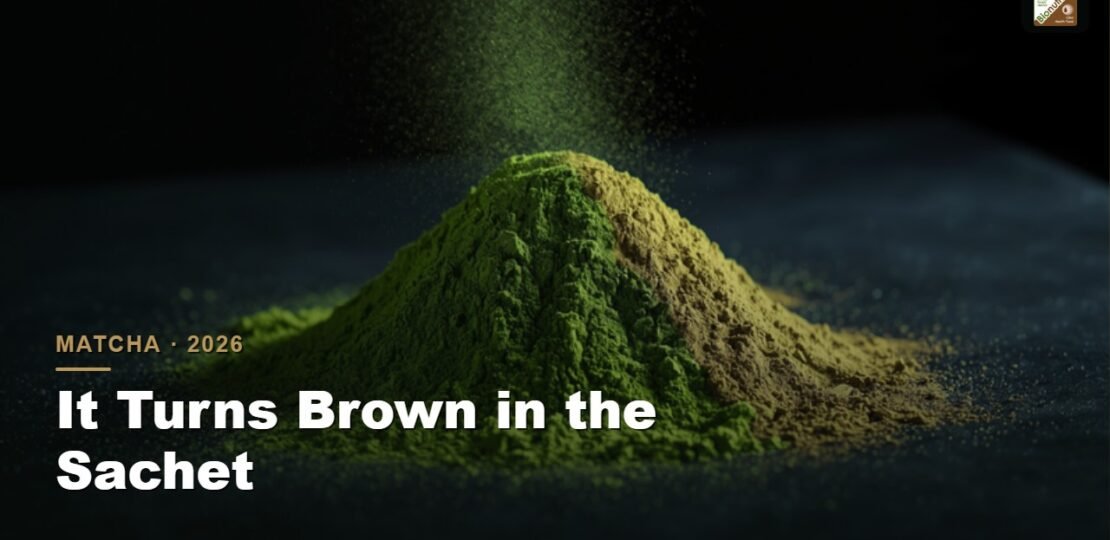
Matcha is one of 2026’s biggest ingredients — and one of the hardest to keep. The green that sells it is chlorophyll, and in the wrong sachet it slowly turns brown. Here is the chemistry behind it, and why keeping instant matcha green is an engineering problem, not just a sourcing one.
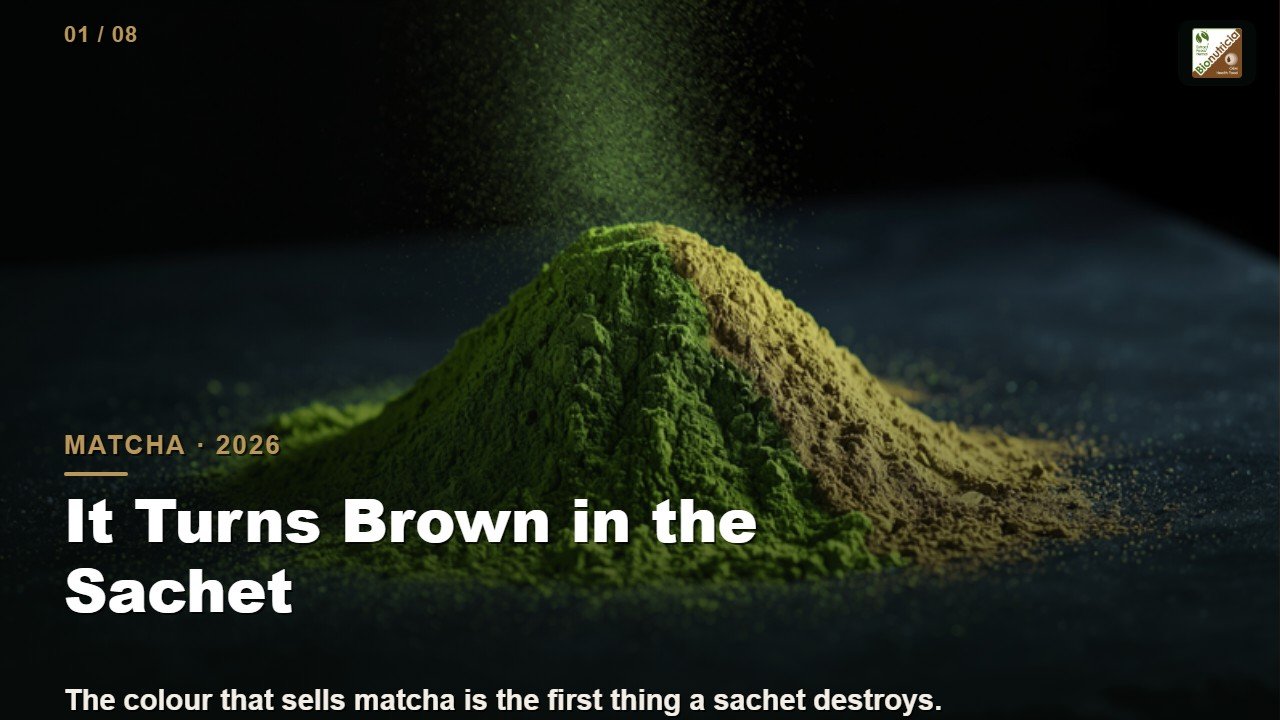
It turns brown in the sachet
Matcha is one of 2026’s defining ingredients. Demand has outrun Japan’s tencha supply, auction prices have roughly doubled year on year, and the powder now anchors cafe menus and drink launches worldwide. But the same thing that makes matcha sell is the thing hardest to keep in a single-serve pack: its colour. Put matcha into a sachet the wrong way and, over weeks and months, it quietly turns from vivid green to a dull, muddy brown. The trend is real. The failure most people never see is what happens to it on the shelf.
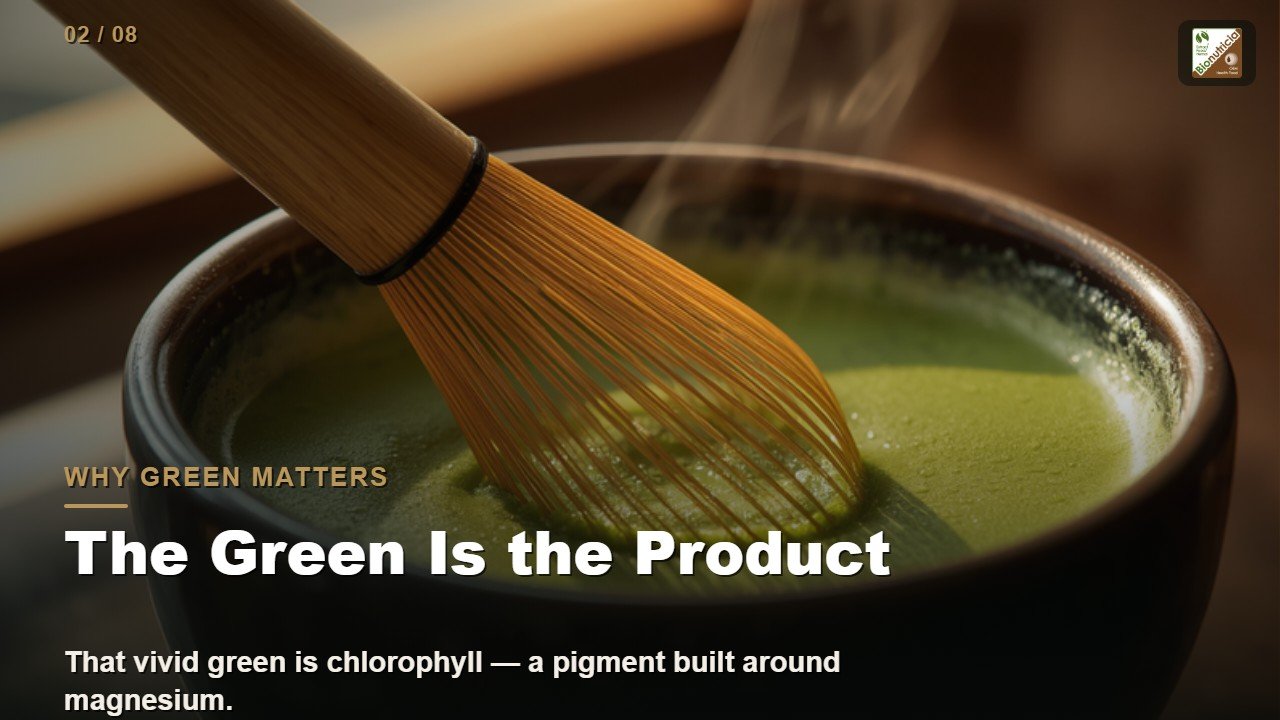
The green is the product
That electric green isn’t decoration — it is the buying trigger, and it is chemistry. Matcha owes its colour to chlorophyll, a pigment molecule built around a central magnesium atom. When the leaf is shade-grown, steamed and stone-milled well, chlorophyll is abundant and the powder reads bright jade. Consumers read that colour as freshness and quality before they taste anything. So the colour is not a cosmetic detail a manufacturer can treat casually; it is the single most visible promise on the product, and it is only as stable as the pigment behind it.
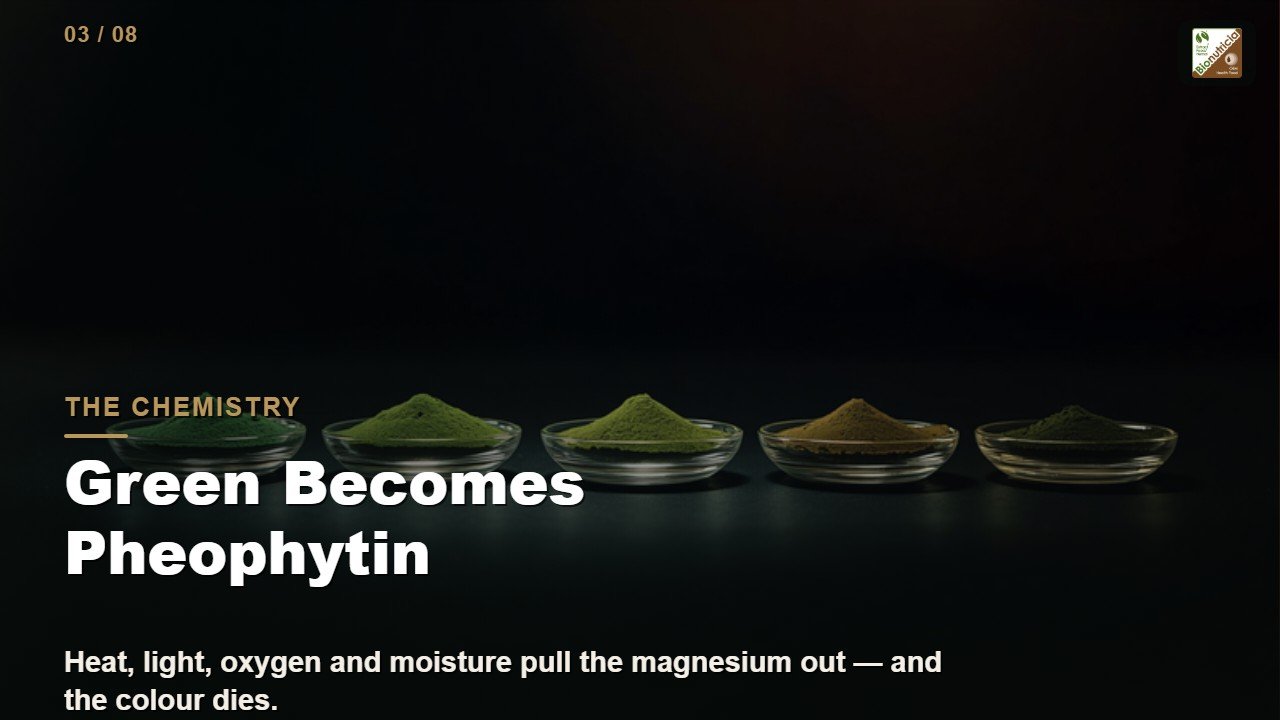
Green becomes pheophytin
Chlorophyll is delicate. Expose it to heat, light, oxygen or moisture and the central magnesium atom is displaced — the molecule converts to pheophytin, a degraded pigment that is olive to brown rather than green. This is the same reaction that dulls over-boiled vegetables. In a powder it happens slowly and invisibly, accelerating with temperature, humidity and light. And it isn’t only a colour problem: as the matcha oxidises it also loses its fresh, umami character and drifts flat, hay-like and bitter. By the time a buyer notices, both the look and the taste have moved.
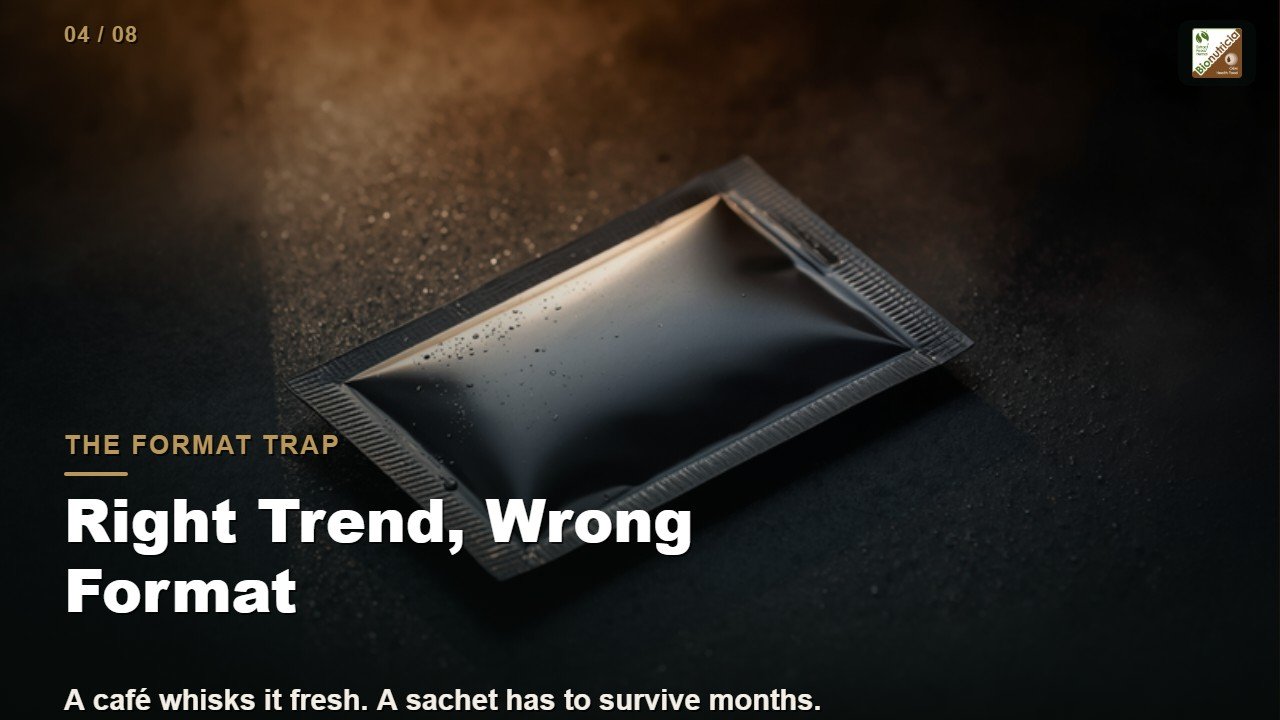
Right trend, wrong format
The failure is rarely the matcha itself — it’s the mismatch between a fragile ingredient and the wrong format. A cafe whisks matcha to order: the tin is opened, the powder is used within days, and it is drunk within minutes of being exposed to water and air. A single-serve sachet lives a completely different life. It is filled, cartoned, shipped, warehoused and merchandised, and it may sit for many months before anyone opens it. The ingredient that looked perfect on the bench has to survive a supply chain the bench never simulated.

Months in Malaysian heat
That supply chain, in this region, runs hot and humid. Malaysia sits in a tropical climatic zone where ambient warehousing routinely means high temperature and high relative humidity — exactly the conditions that speed pigment degradation and oxidation. A thin, breathable or poorly sealed pack lets oxygen and water vapour migrate in slowly and steadily. Each is a driver of the chlorophyll-to-pheophytin reaction, so an instant matcha that looked vivid at fill can arrive at the shelf visibly duller, with its taste following the colour down.
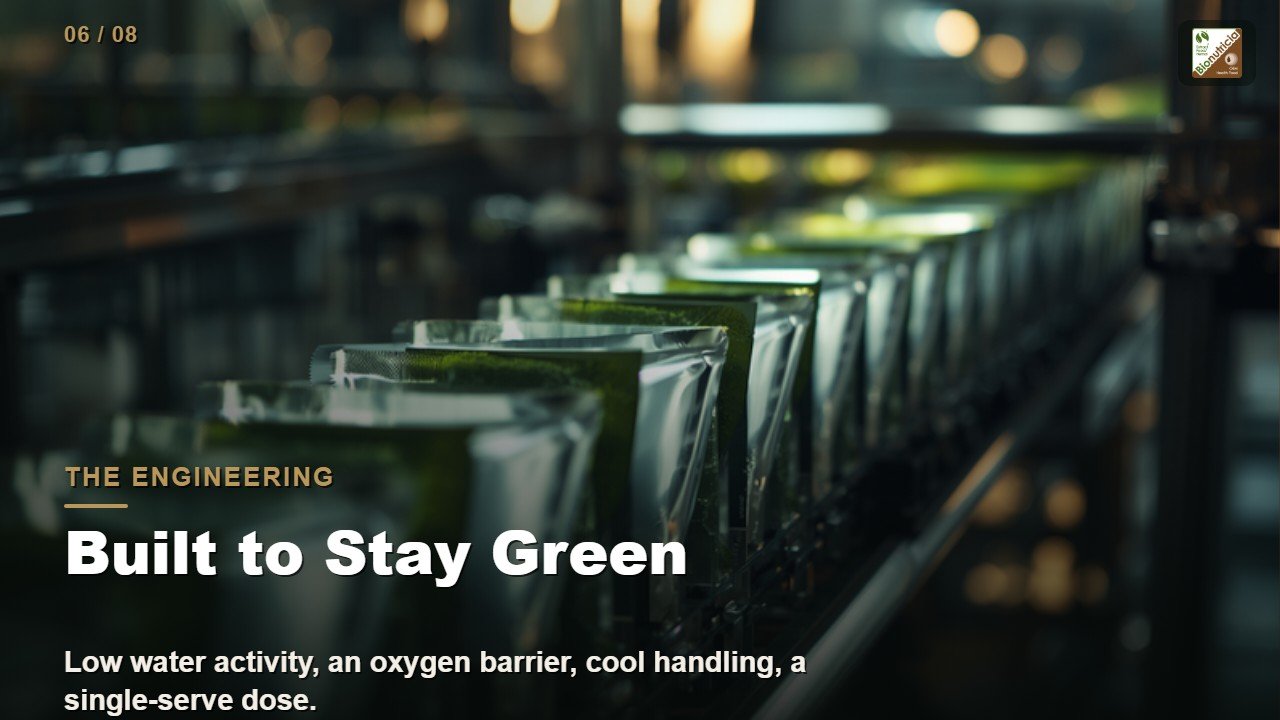
Built to stay green
Keeping matcha green in a sachet is an engineering problem, not a sourcing one — and it is solvable. It starts with a low-water-activity powder, because free water is what mobilises the degradation reactions. It needs a genuine barrier laminate that keeps oxygen and moisture out, not just a pack that looks premium. It benefits from cool, controlled handling through blending and filling rather than unnecessary heat. And a single-serve dose means the pack is opened once and used, instead of a large tin that oxidises a little more with every reseal. None of these are exotic; together they are the difference between a matcha that holds and one that fades.
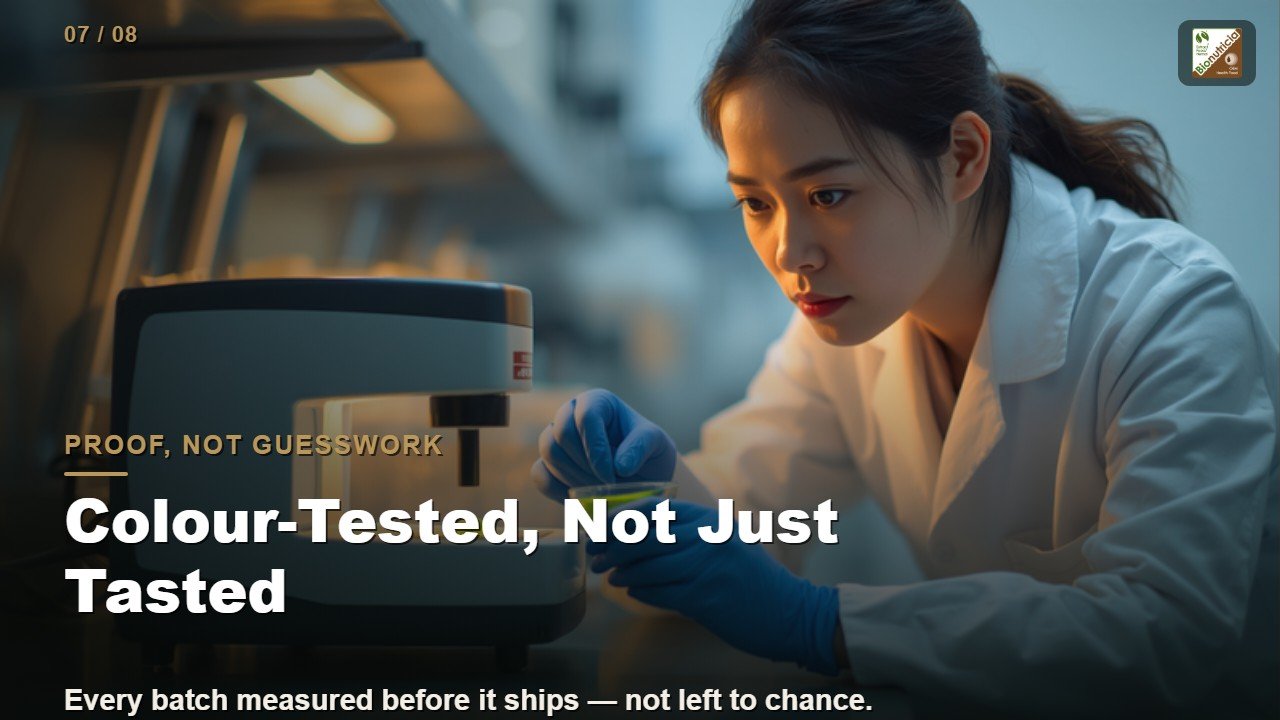
Colour-tested, not just tasted
The last piece is proof. A serious matcha programme measures colour on the finished batch rather than judging it by eye or by taste alone — an instrument reads the green value objectively, so a fading trend can be caught before product ships. That sits inside the same discipline that governs any well-made powder: controlling water activity, verifying the barrier, and holding stability over a real shelf life instead of assuming it. Testing the colour is how a claim of staying green stops being a hope and becomes a specification.
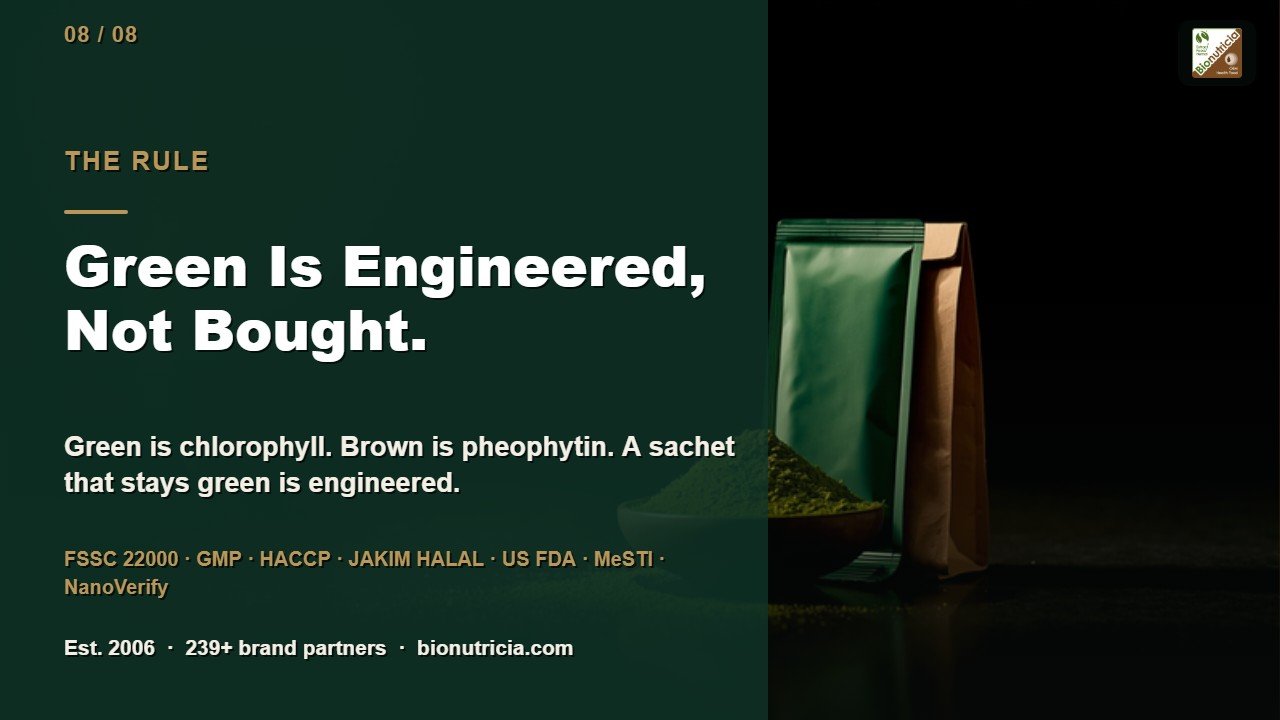
Green is engineered, not bought
Matcha is a wonderful ingredient to build around, but its best feature is also its most fragile one. Fresh matcha is green because of chlorophyll; a sachet that is still green six months later is green because someone engineered it to be — through format, barrier, water activity, handling and testing. As a halal beverage and sachet manufacturer, that is the problem we solve: matching a fragile, high-visibility ingredient to a format and a process that protect it. Before you launch a matcha product, it is worth asking one question — will it still be green in six months, and can anyone prove it?
Frequently asked questions
Why does matcha turn brown or yellow?
Matcha’s green comes from chlorophyll, a pigment built around a magnesium atom. Heat, light, oxygen and moisture displace that magnesium and convert the chlorophyll to pheophytin, a degraded olive-to-brown pigment. The change is gradual and speeds up with higher temperature, humidity and light exposure, which is why matcha stored in warm, humid conditions or a poorly sealed pack loses its colour over time.
Does brown, oxidised matcha still taste the same?
No. The same oxidation that dulls the colour also changes the flavour. Fresh matcha is bright and umami; as it degrades it tends to taste flat, weak, hay-like and more bitter. Colour and taste move together, so a visibly duller matcha is usually a less pleasant one to drink.
What keeps an instant matcha sachet green?
Several things working together: a low-water-activity powder so there is little free water to drive the reactions, a genuine barrier laminate that keeps oxygen and moisture out, cool and controlled handling rather than unnecessary heat, a single-serve dose so the pack is opened only once, and finished-batch colour testing so fading is caught before shipment.
Is water activity the same as moisture content?
No. Moisture content is how much water is present; water activity is how much of that water is free and available to drive reactions such as pigment degradation, microbial growth and caking. Two powders with the same moisture can behave very differently depending on their water activity, which is why it is a core specification for a stable powder.
What matcha formats can Bionutricia manufacture?
Bionutricia is a halal contract manufacturer specialising in sachets, stick-packs, pouch beverages and powders — the formats matcha actually ships in. It does not produce capsules, softgels, gummies or effervescent tablets. Matcha and matcha blends are handled under the same water-activity, stability and quality controls applied to every powder, with in-house testing on each batch.
RELATED POSTS
View all


Article: Spinach extract supports muscle strength in adults over 50
October 5, 2024 | by bionutriciaadmin
Article: Cocoa and Red Berry Blend linked to boost in brain function
October 5, 2024 | by bionutriciaadmin
Article: Food as Medicine: Black Elderberry (Sambucus nigra, Adoxaceae)
October 5, 2024 | by bionutriciaadmin