


A Clean Factory Isn’t a Safe Factory: The 5 Control Rooms the Tour Skips
August 13, 2026 | by supersuper
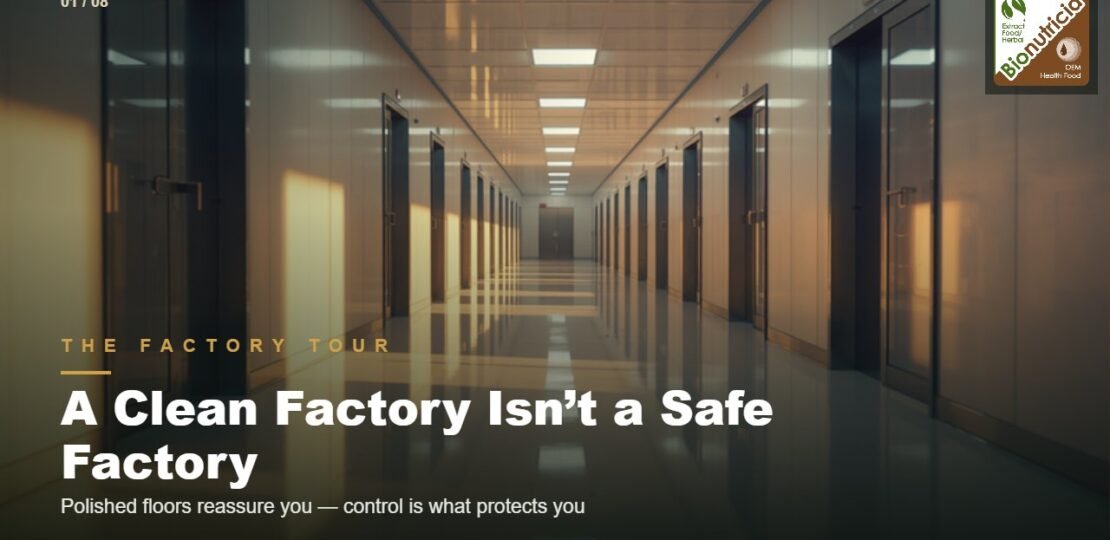
A spotless factory can still fail your batch. The polished corridor on the tour is what you are shown; the five control rooms below are what actually protect your product. Here is what to ask to see — and why each room exists.
A Clean Factory Isn’t a Safe Factory
Every brand owner gets the same factory tour. Polished floors. Staff in fresh gowns. The one photogenic corridor with good light. It is designed to reassure you — and it works. But a clean-looking line and a controlled line are not the same thing.
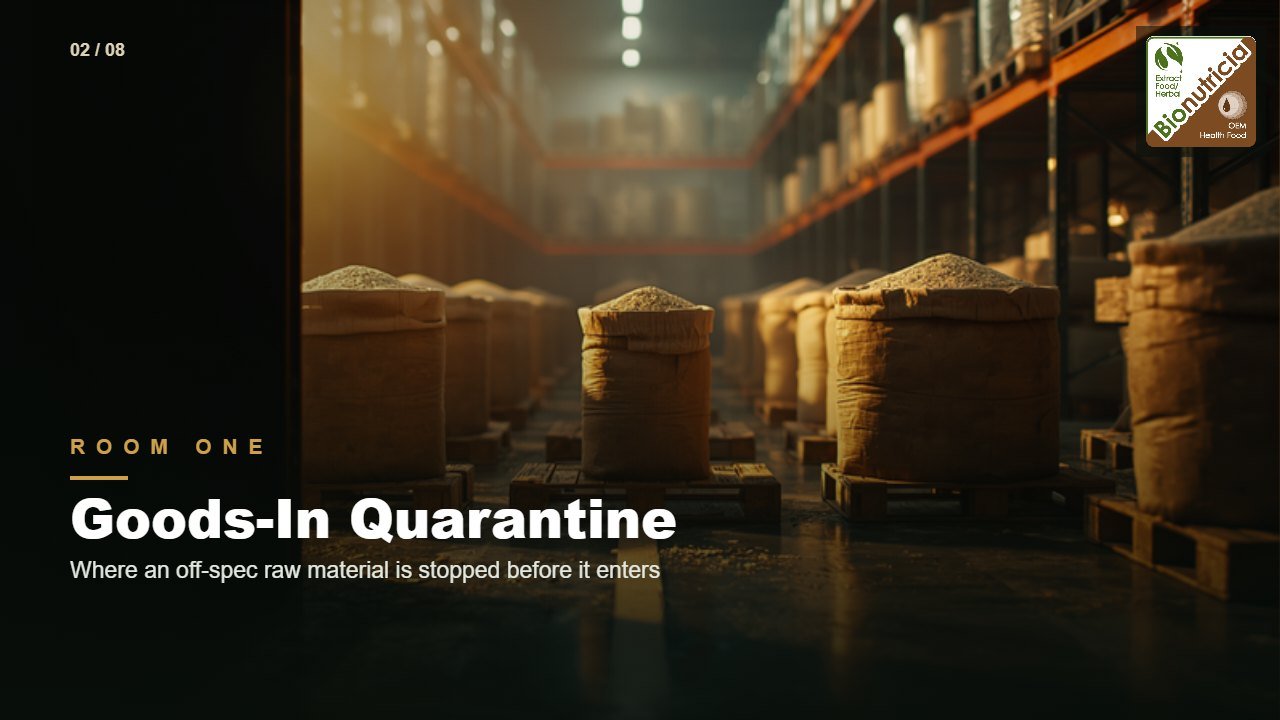
Room One: Goods-In Quarantine
Cleanliness is what you can see. Control is the system that decides what happens when something goes wrong — starting at the loading dock. Incoming raw material waits in a marked quarantine zone until identity and quality are verified. Without it, an off-spec drum rolls straight into your formula.
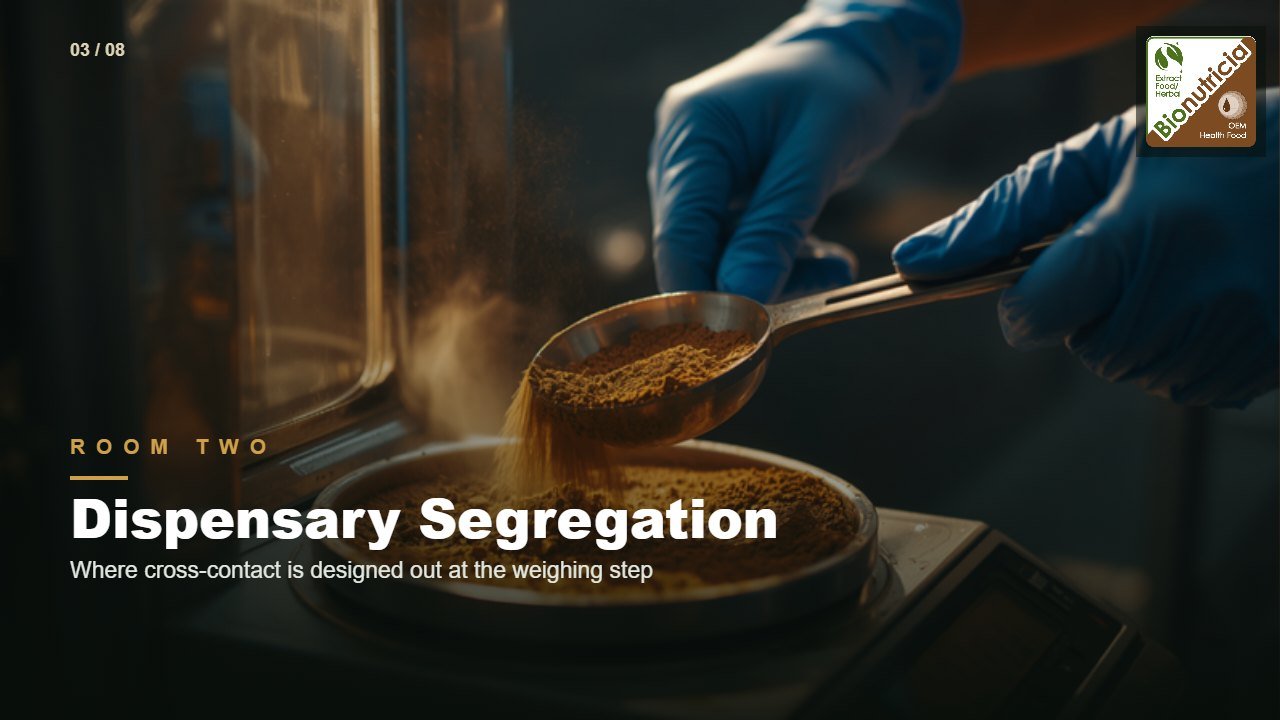
Room Two: Dispensary Segregation
The dispensary is where cross-contamination is designed out — or quietly designed in. Shared equipment at the weighing step, especially a shared scoop moving between an allergen and a clean active without verified cleaning in between, is the classic failure. Segregated, controlled weighing bays with cleaning verification are the control.
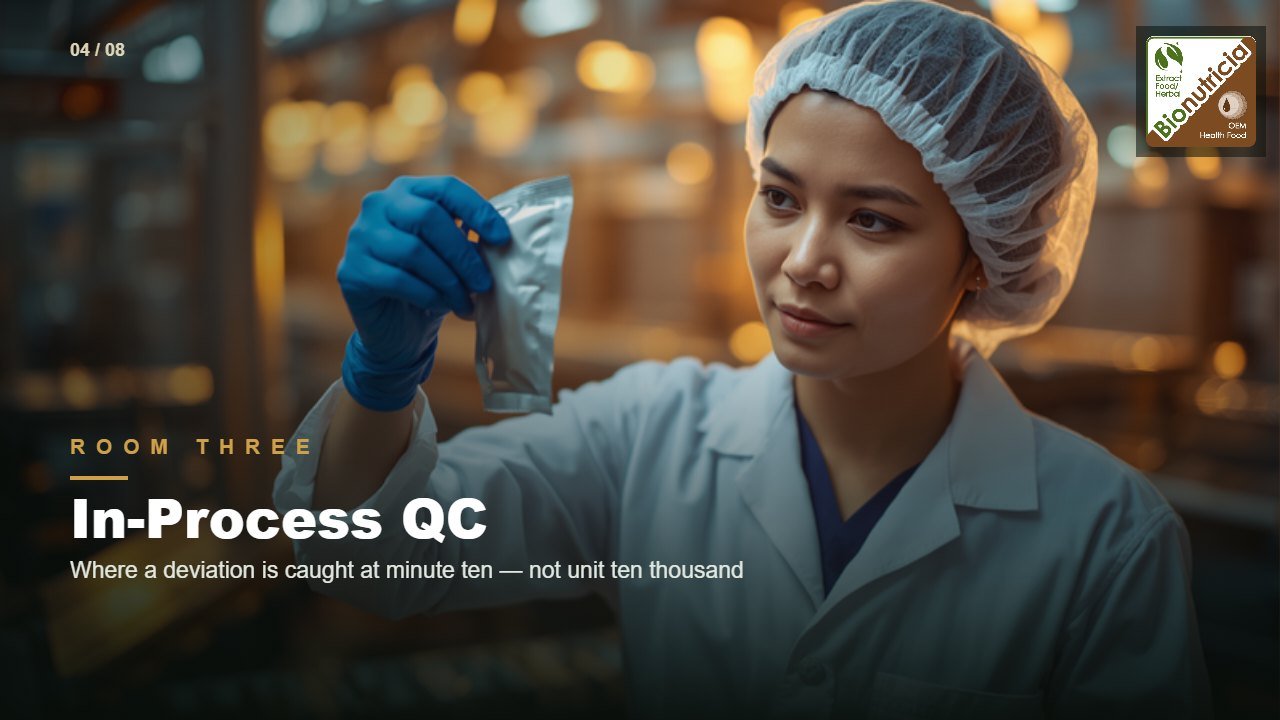
Room Three: In-Process QC
End-of-line testing finds a problem after the whole batch is made. In-process checks catch a deviation mid-run — at minute ten instead of after ten thousand units — so far less is scrapped and the error never ships. If a factory only tests at the end, the batch carries the risk the whole way through.
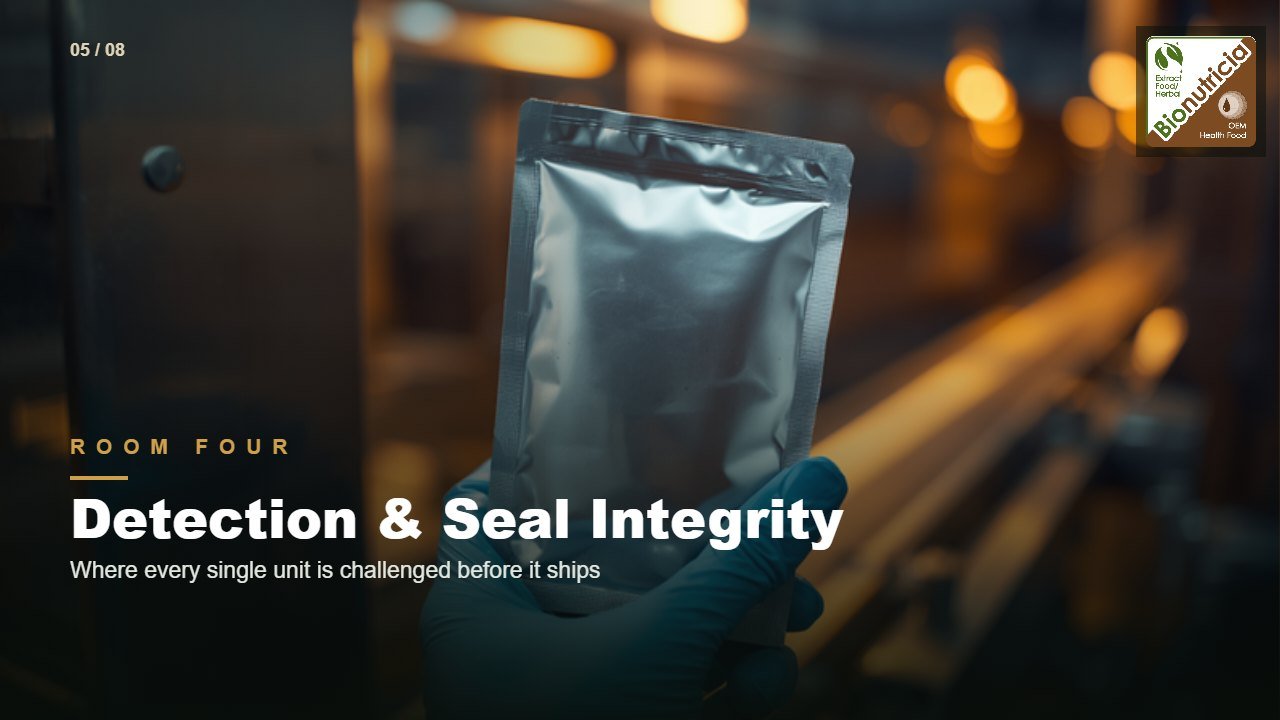
Room Four: Detection and Seal Integrity
Before anything leaves the line, every unit passes through detection — metal check, weight check, seal verification. A weak seal is invisible in a glossy tour photo and very visible three months later on a shelf in humid heat. Unit-level challenge is what protects the product after it leaves the building.
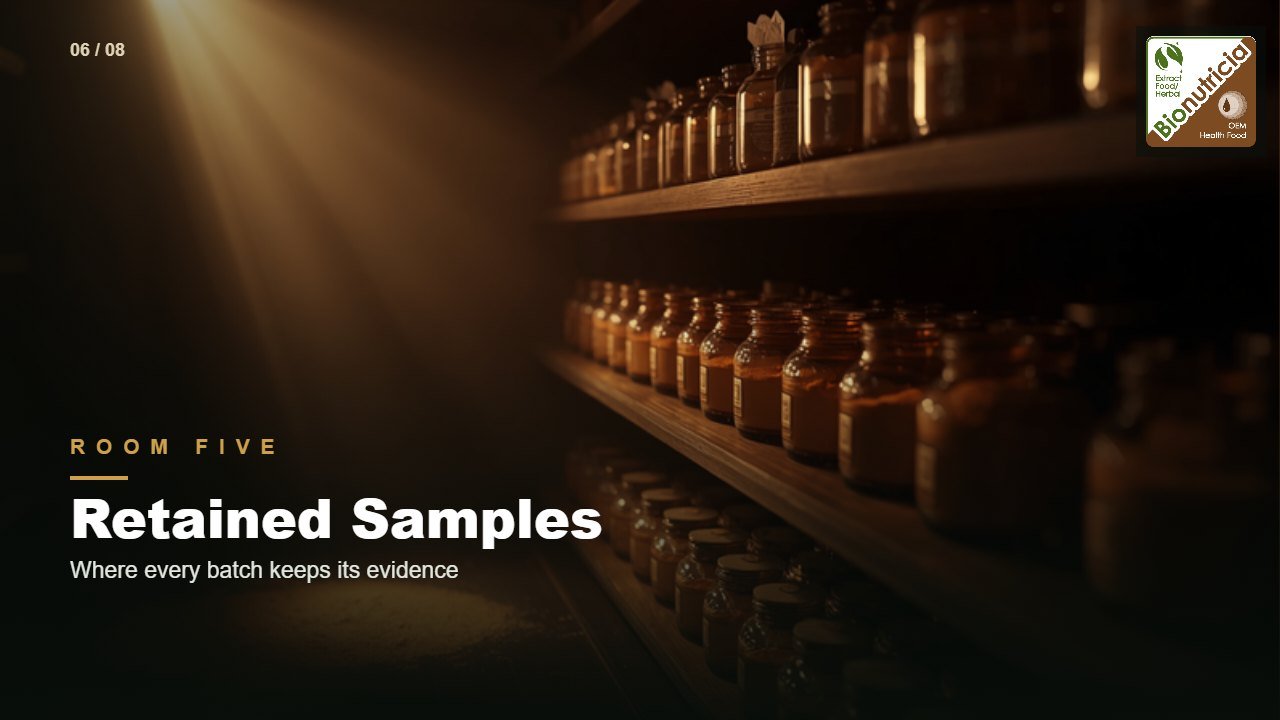
Room Five: Retained Samples
Retained samples give you traceability. If a batch is ever questioned by a customer, auditor or regulator, a retained sample tied to the batch record lets the factory investigate the exact material that shipped — rather than guessing. A shelf of labelled jars is what accountability physically looks like.

The Paper Trail: The Batch Record
Every one of those rooms produces records, and the batch record ties them together. It is the difference between a factory that says the right things and a factory that can prove them. In an audit, the rule is simple: if it is not written down, it did not happen.
Clean Is What You See. Controlled Is What Protects.
Bionutricia has built halal supplements this way since 2006 — FSSC 22000, GMP, HACCP, JAKIM Halal, US FDA and MeSTI certified, plus NanoVerify — across powder, liquid and gel sachets, pouch beverages, chewable tablets and liquid bottles. On your next factory visit, skip the photogenic corridor and ask to see the five rooms above. How readily they show you tells you how your product will really be made.
Frequently asked questions
Does a clean factory mean a safe supplement?
Not necessarily. Cleanliness is visual; contamination control is a validated system — quarantine, segregation, in-process checks, detection and traceability. A line can be visually spotless and still lack the controls that catch an off-spec material or a cross-contamination event.
What is the most common cross-contamination risk in a supplement factory?
Shared equipment at the weighing and dispensary step — especially a shared scoop or tool moving between an allergen and a clean active without verified cleaning in between. Segregated, controlled weighing bays with cleaning verification are the control.
Why do in-process checks matter if the batch is tested at the end?
End-of-line testing finds a problem after the whole batch is made. In-process checks catch a deviation mid-run — at minute ten instead of after ten thousand units — so you scrap far less and never ship the error.
What do retained samples actually do for a brand owner?
They give you traceability. If a batch is ever questioned by a customer, auditor or regulator, a retained sample tied to the batch record lets you investigate the exact material that shipped — rather than guessing.
What should I ask to see on a supplement factory tour?
Ask to see all five: goods-in quarantine, dispensary segregation, in-process QC, metal-detection and seal integrity, and retained samples. How readily they show you — and how their systems are documented — tells you how your product will really be made.
Explore our OEM formats: supplement sachet OEM manufacturer in Malaysia · chewable tablet supplement OEM manufacturer in Malaysia
RELATED POSTS
View all

Article: Food as Medicine | Banana (Musa spp., Musaceae)
October 5, 2024 | by bionutriciaadmin

Article: Effect of Catechins on Upper Respiratory Tract Infections in Winter
October 5, 2024 | by bionutriciaadmin

Article: Cocoa and Red Berry Blend linked to boost in brain function
October 5, 2024 | by bionutriciaadmin