

From Trading to Owning: How a Malaysian Pharmacy Chain Builds a Sugar-Free Beauty Brand with Siraitia Grosvenorii + Collagen Peptides in a Herbosomal® Pouch Beverage
October 15, 2026 | by supersuper
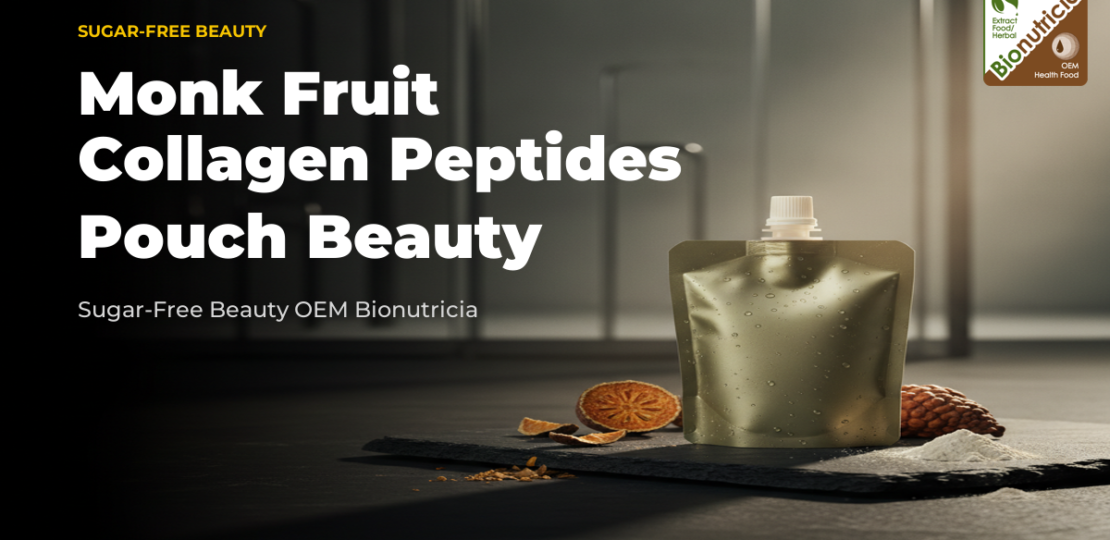
Direct answer: Moving from reselling third-party supplements to owning a private-label sugar-free beauty line requires a Malaysian pharmacy chain to specify two actives — siraitia grosvenorii for natural sweetness and collagen peptides for the beauty proposition — select a pouch beverage format, and secure a JAKIM-certified OEM partner with liposomal encapsulation capability.
The transition from trading another company’s brand to owning your own is the single highest-leverage decision a pharmacy chain can make in the supplement category. It shifts the business from a retail margin on someone else’s product to full control over formulation, pricing, packaging and brand equity — but only if the specification, format and manufacturing partner are chosen correctly.
A sugar-free beauty pouch beverage combining monk fruit sweetener with collagen peptides answers two buyer demands at once: consumers want clean-label, sugar-free functional drinks, and the pharmacy chain wants a defensible private-label product that a competitor cannot copy from a catalogue. This guide walks through the five decisions a brand owner must make before the formulation can be quoted.
The Trading-to-Owning Journey for a Malaysian Pharmacy Chain
Most Malaysian pharmacy chains begin in supplements by reselling established third-party brands — buying at a trade discount and retailing at shelf price. The margin is predictable but thin, the brand belongs to someone else, and every competitor in the same plaza carries the same product. Owning a private-label line changes the economics: the pharmacy chain controls the formulation, the ingredient standardisation, the packaging design and the retail price, and the brand equity compounds with every repeat purchase.
The practical steps are straightforward but sequential. First, the chain selects the active ingredients and the functional positioning — here, a sugar-free beauty drink built on siraitia grosvenorii and collagen peptides. Second, it chooses the format — a pouch beverage that consumers can drink cold from the shelf. Third, it specifies the assay markers, the certificate of analysis parameters and the halal chain. Fourth, it selects an OEM partner with the right certifications and technology. Fifth, it signs off the formulation, packaging and artwork before production begins.
Why Siraitia Grosvenorii + Collagen Peptides?
Siraitia grosvenorii — known worldwide as monk fruit and regionally as Luo Han Guo — is a round green fruit of the Cucurbitaceae family whose sweetness comes not from sugar but from a group of triterpene glycosides called mogrosides, chiefly Mogroside V. The monk fruit extract is a 70:1 water-soluble extract standardised to ≥25% Mogroside V, roughly 250 times sweeter than sucrose, dosed at 0.01–0.05% in formulation. It gives the pouch beverage its sweetness without adding sugar — the core of the sugar-free claim on the label. Bionutricia’s patented enzymatic ultrasonic extraction (MY-188945-A) concentrates the fruit’s mogrosides into a clean, water-soluble powder for this purpose.
Collagen peptides are short-chain protein fragments produced by hydrolysing collagen. The liposomal collagen peptide raw material contains approximately 50% collagen from bovine and fish (marine) origin, in a water-soluble light-yellow powder. The fish-derived fraction is a declarable allergen that must appear on the finished-product label. Together, the two actives provide a single pouch beverage that is sweetened naturally and carries a beauty-from-within active — a combination a pharmacy chain can own as a distinct SKU.
| Parameter | Siraitia Grosvenorii | Collagen Peptides |
|---|---|---|
| Botanical / animal origin | Siraitia grosvenorii (monk fruit), fruit | Bovine and fish (marine) |
| Extraction / processing | 70:1 water-soluble extract | Hydrolysed peptides, ~50% collagen |
| Standardisation | Mogroside V ≥25% | ~50% collagen content |
| Relative sweetness | ~250× sweeter than sucrose | Not applicable |
| Form | Off-white to white powder | Light yellow powder |
| Solubility | Water-soluble | Water-soluble |
| Allergen | None listed | Contains fish |
| Typical use level | 0.01–0.05% | 480–960 mg per serve |
| Shelf life | 24 months sealed, cool & dry | 24 months sealed, <25°C, RH <65% |
What the Research Shows
Published clinical studies on collagen peptides and skin include a single-blind case-control clinical study (Oxidative Medicine and Cellular Longevity, 2016, PMID 26904164; https://pubmed.ncbi.nlm.nih.gov/26904164/) and a double-blind placebo-controlled clinical study (Molecules, 2021, PMID 34443468; https://pubmed.ncbi.nlm.nih.gov/34443468/). Neither record carries a reported result. For a brand owner, the specification and standardisation of each active are the primary quality anchors when commissioning an OEM formulation. The Mogroside V assay, the collagen peptide content and the certificate of analysis parameters are what ensure batch-to-batch consistency in a finished pouch beverage.
Specification Decisions Before Formulation
Before an OEM can quote a formulation, the brand owner must set five specifications. These are the decisions that determine cost, stability, shelf life and label claims.
| Decision | What the brand owner must set | Why it matters |
|---|---|---|
| Mogroside V percentage | ≥25% or higher standardisation | Determines sweetness intensity and dose |
| Collagen dose per pouch | 480–960 mg | Determines the beauty-active content |
| Collagen origin | Bovine, fish, or both | Determines allergen declaration and halal chain |
| CoA parameters | Heavy metals, microbial limits | Ensures batch-to-batch consistency |
| Shelf life & storage | 24 months, temperature and humidity | Affects packaging and distribution |
First, the Mogroside V percentage: the monk fruit extract is standardised to ≥25%, but a brand owner can request a higher standardisation if a sweeter, more concentrated dose is needed. Second, the collagen peptide content: the liposomal raw material contains approximately 50% collagen, and the brand owner must decide the target collagen dose per pouch — typically 480–960 mg. Third, the collagen origin: bovine, fish (marine), or both, which determines the allergen declaration. Fourth, the heavy-metal and microbial limits, which must meet the certificate of analysis parameters for each lot. Fifth, the shelf-life and storage conditions, which affect packaging choice and distribution planning.
Format Choice: Why Pouch Beverage?
A pouch beverage is a ready-to-drink liquid in a flexible stand-up pouch — a format that suits a sugar-free beauty drink for several reasons. It provides a single measured serve, which simplifies dosing for the consumer. It holds both water-soluble actives — the monk fruit extract and the collagen peptides — in one liquid vehicle without the need for the consumer to mix powder. And it stands out on a pharmacy shelf as a premium functional beverage rather than a supplement.
For the collagen peptide fraction, Herbosomal® — Bionutricia’s proprietary liposomal encapsulation and sustained-release technology (registered trademark; patent-pending PI2023005773) — is available as a formulation option. Powder sachets and liquid bottles are alternative formats where a different strategy is preferred, but the pouch beverage remains the most direct route to a ready-to-drink sugar-free beauty line.
Halal Chain and Certification
A JAKIM-certified halal pouch beverage requires every input in the formulation — the monk fruit extract, the collagen peptides, the flavour system and the packaging — to be covered by valid halal certification, with physical segregation from non-halal materials throughout receiving, storage, production and dispatch. The fish-derived collagen peptide fraction is halal-certified but carries a fish allergen declaration that must appear on the label.
The certifications a brand owner should verify before signing with an OEM are FSSC 22000, GMP, HACCP, JAKIM Halal, US FDA registration and MeSTI, with NanoVerify validation where liposomal technology is used. These are not optional — they are the minimum a Malaysian pharmacy chain needs to sell a private-label supplement with confidence in domestic and export markets.
Manufacturing a Siraitia Grosvenorii + Collagen Peptides Pouch Beverage Under Your Own Brand
Bionutricia offers formulation development and private-label OEM/ODM manufacturing for brand owners and distributors commissioning a siraitia grosvenorii + collagen peptides pouch beverage. The pouch beverage format suits this combination — a liquid vehicle holds both the water-soluble monk fruit extract and the collagen peptide fraction in a single ready-to-drink serve. Powder sachets and liquid bottles are also available where a different format strategy is preferred. For the collagen peptide fraction, Herbosomal® — Bionutricia’s proprietary liposomal encapsulation and sustained-release technology (registered trademark; patent-pending PI2023005773) — is available as a formulation option. The monk fruit extract is processed using Bionutricia’s patented enzymatic ultrasonic extraction (MY-188945-A). The integrated facility in Sungai Buloh operates under JAKIM halal, FSSC 22000, GMP, HACCP, US FDA registration and MeSTI, with NanoVerify validation. Brand owners can review the full OEM capability for collagen beauty lines at Collagen & Beauty-from-Within OEM.
Frequently Asked Questions
What is Mogroside V and why does its percentage matter for a sugar-free beauty pouch beverage?
Mogroside V is the principal sweetening compound in siraitia grosvenorii fruit, roughly 250 times sweeter than sucrose. A ≥25% standardisation means the extract delivers consistent sweetness at a very low use level (0.01–0.05%), which is what makes a sugar-free claim defensible on the label.
Can a halal-certified OEM manufacture a pouch beverage containing both fish-derived collagen peptides and monk fruit extract?
Yes. Both ingredients can be covered under JAKIM halal certification, provided every input — including the fish-derived collagen — has valid halal documentation and the production line maintains physical segregation from non-halal materials. The fish allergen must be declared on the finished-product label.
What is Herbosomal® and how does it apply to a collagen peptide pouch beverage?
Herbosomal® — Bionutricia’s proprietary liposomal encapsulation and sustained-release technology (registered trademark; patent-pending PI2023005773) — is a formulation option for the collagen peptide fraction. It is a manufacturing capability, not a health claim, and a brand owner should treat it as a format decision when specifying the formulation.
What specifications should a brand owner set for a siraitia grosvenorii + collagen peptides pouch beverage before requesting a quotation?
Five: the Mogroside V percentage (≥25% or higher), the collagen dose per pouch (typically 480–960 mg), the collagen origin (bovine, fish, or both), the heavy-metal and microbial CoA limits, and the shelf-life and storage conditions. These determine cost, stability, label claims and packaging.
How does a pharmacy chain transition from reselling to owning a private-label supplement brand?
The chain selects the actives and functional positioning, chooses the format, specifies the assay markers and CoA parameters, selects a JAKIM-certified OEM partner with the right technology, and signs off the formulation and artwork before production. The result is a private-label SKU the chain owns outright.
Related Guides
- Monk Fruit (Siraitia grosvenorii) — Sweetener & Halal OEM Datasheet
- Building a Pink Guava Supplement Brand: What a Brand Owner Must Decide
- Roselle + Collagen Peptides in a Herbosomal® Liquid Sachet
To request a quotation for a siraitia grosvenorii + collagen peptides pouch beverage under your own brand, email ng@bio-nutricia.com or submit an enquiry through our website. Bionutricia’s integrated facility in Sungai Buloh, Selangor, Malaysia, operates under JAKIM halal, FSSC 22000, GMP, HACCP, US FDA registration, MeSTI and NanoVerify validation.
Article by Bionutricia R&D Team. Last updated: 2026-10-09.
RELATED POSTS
View all


Halal Segregated Storage & Logistics: What a Supplement OEM Must Prove to a Brand Owner
September 28, 2026 | by supersuper